Mabamba Shoebill Birdwatching: What to Expect
A Mabamba Shoebill Birdwatching Tour from Entebbe is one of the easiest ways to experience Uganda’s famous wetlands without traveling deep into the country. Located on the shores of Lake Victoria, Mabamba Swamp is well known for its Shoebill Stork and can be explored by canoe with a local wetland guide.
For travelers staying in Entebbe, the experience can be completed in a single day, making it particularly useful for visitors with limited time before or after a Uganda safari.
But what is the Mabamba experience actually like? When should you go, what birds can you see, and how do you get from Entebbe to the swamp?
This guide explains what to expect.
What Is Mabamba Swamp?
Mabamba Swamp is a large wetland on the northern shores of Lake Victoria, not far from Entebbe. The wetland consists largely of papyrus channels and shallow waters that provide habitat for many species of birds.
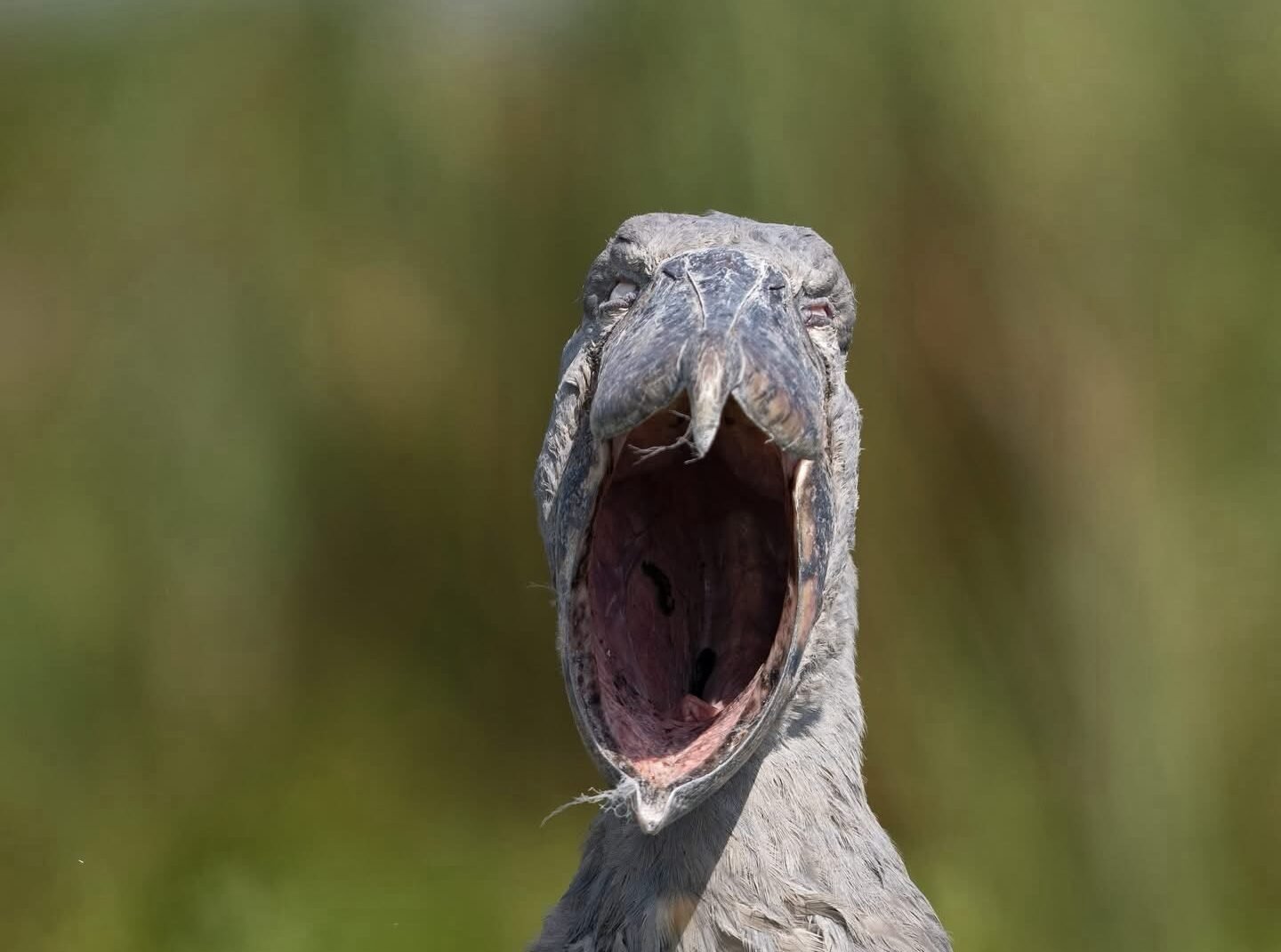
The area is especially famous for the Shoebill Stork, a large prehistoric-looking bird that has become one of Uganda’s most sought-after birdwatching species.
Mabamba is also recognized as a Ramsar wetland site and has developed community-based tourism around birdwatching.
For visitors, the main attraction is not a conventional game drive. Instead, you travel through the wetland by canoe while a local guide searches the papyrus channels for birds.
Why Take a Mabamba Shoebill Birdwatching Tour from Entebbe?
Entebbe is an excellent base for exploring Mabamba because the wetland can be visited as a day excursion.
A Mabamba Shoebill Birdwatching Tour from Entebbe is especially convenient for travelers who do not have enough time for a multi-day birding safari.
You can leave your hotel in the morning, spend several hours exploring the wetland and return to Entebbe later in the day.
The tour also provides a completely different experience from Uganda’s traditional wildlife safaris.
Instead of searching for lions, elephants and buffaloes from a 4×4 safari vehicle, your focus is on birds, wetlands and the quiet canoe journey through the papyrus.
The Main Attraction: The Shoebill
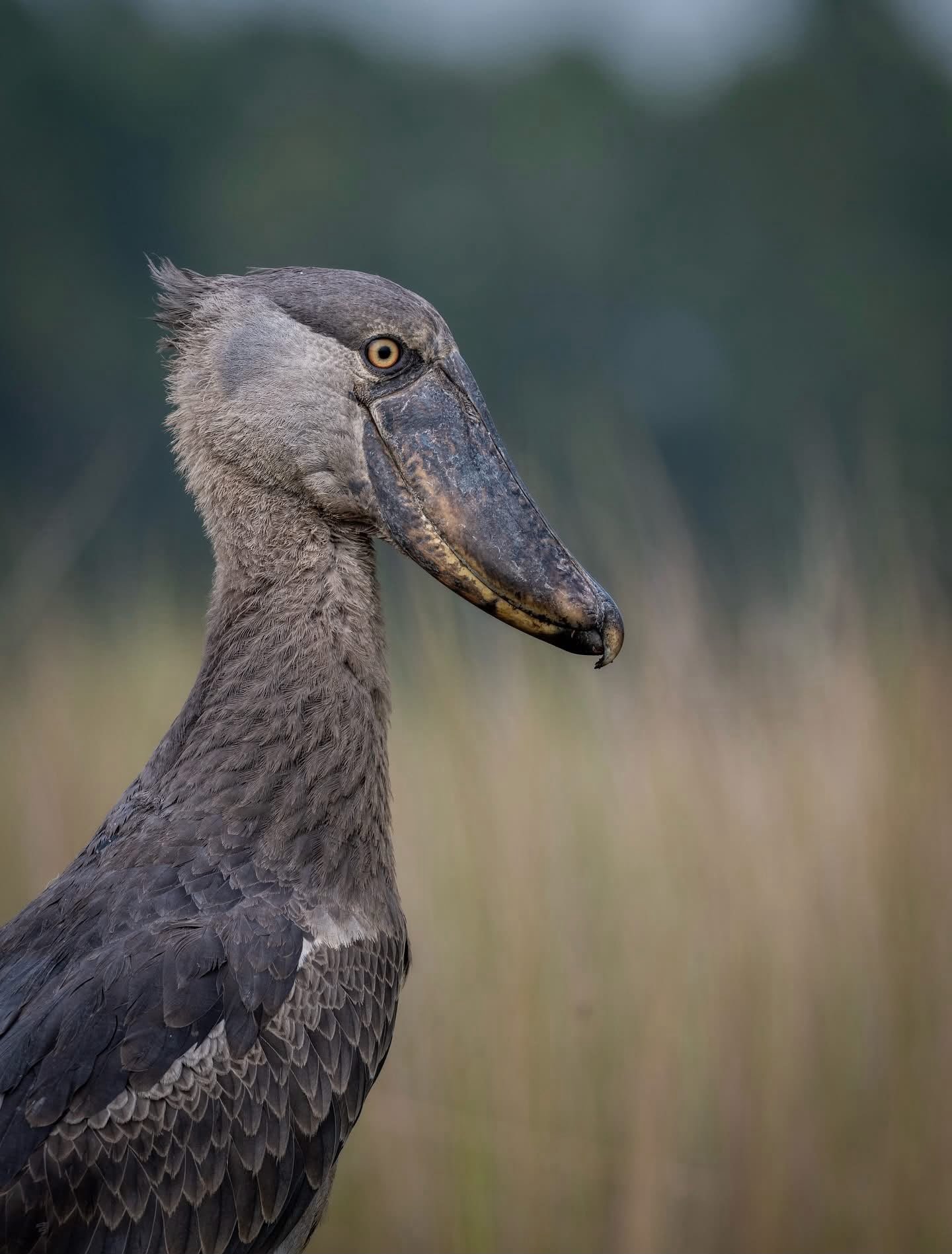
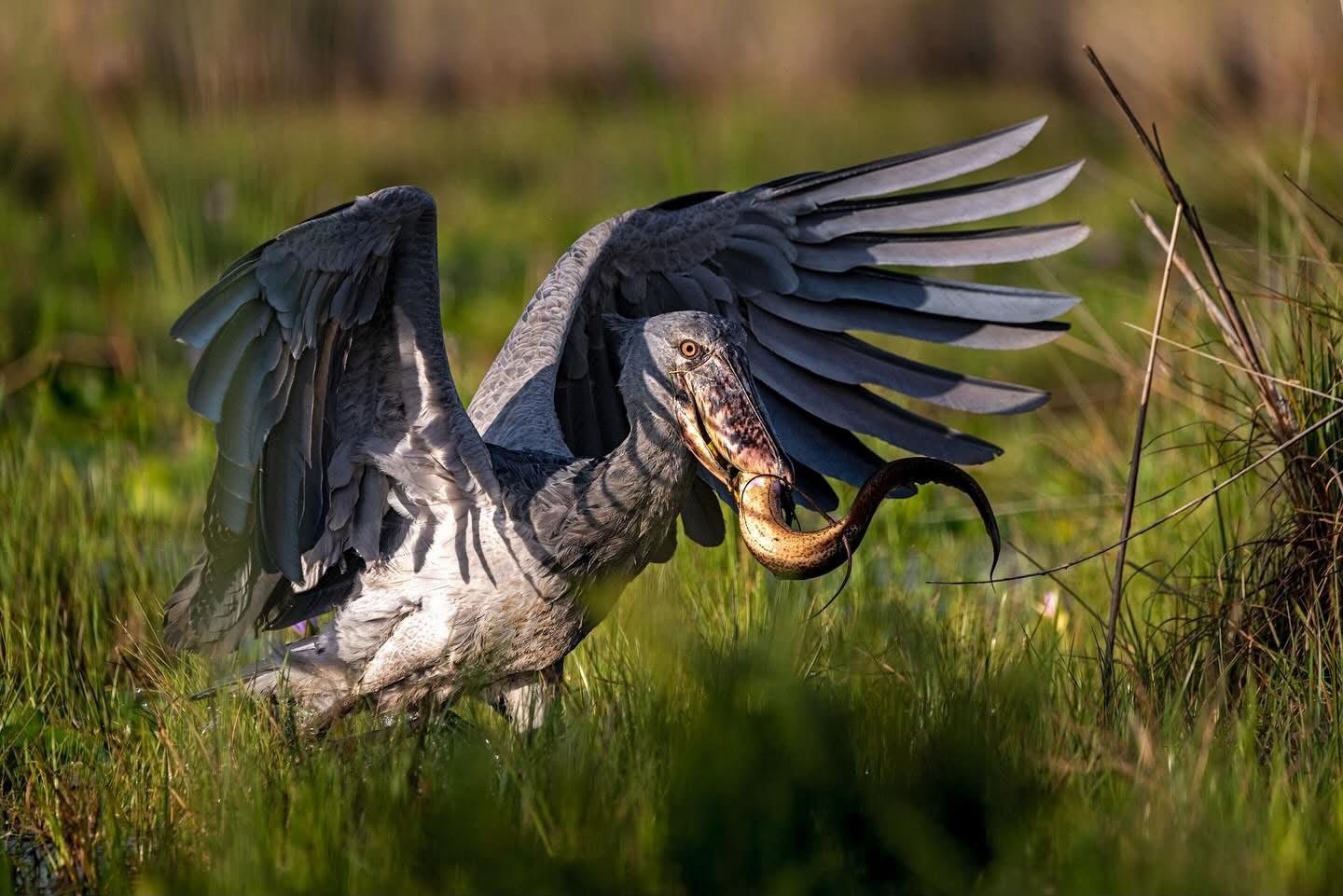
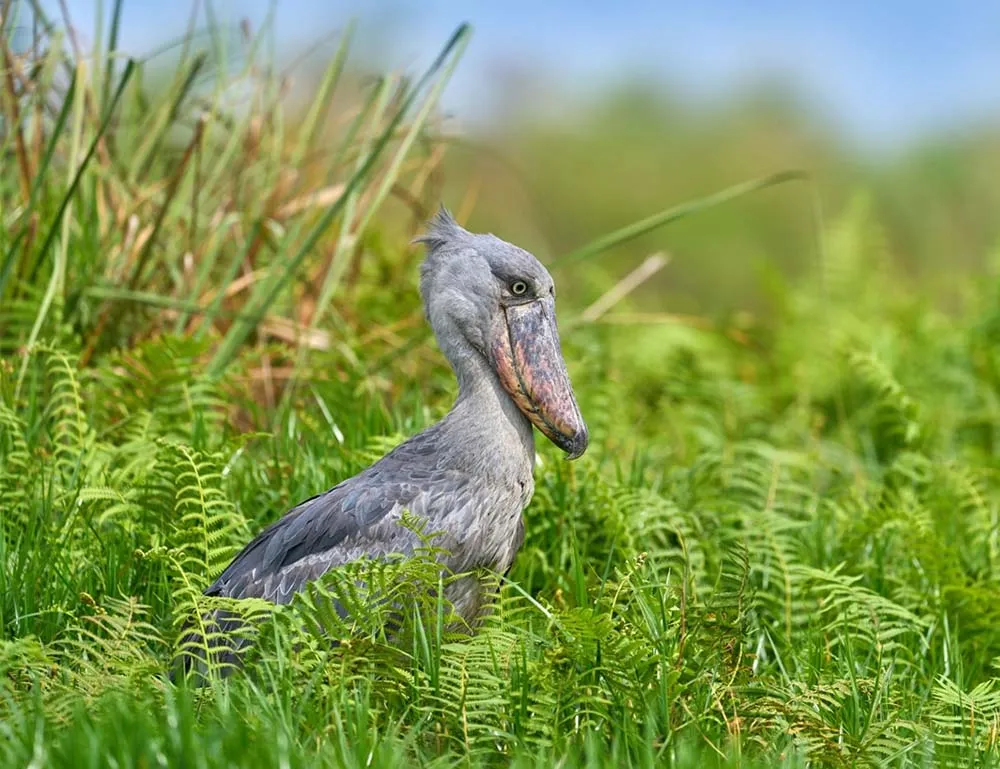
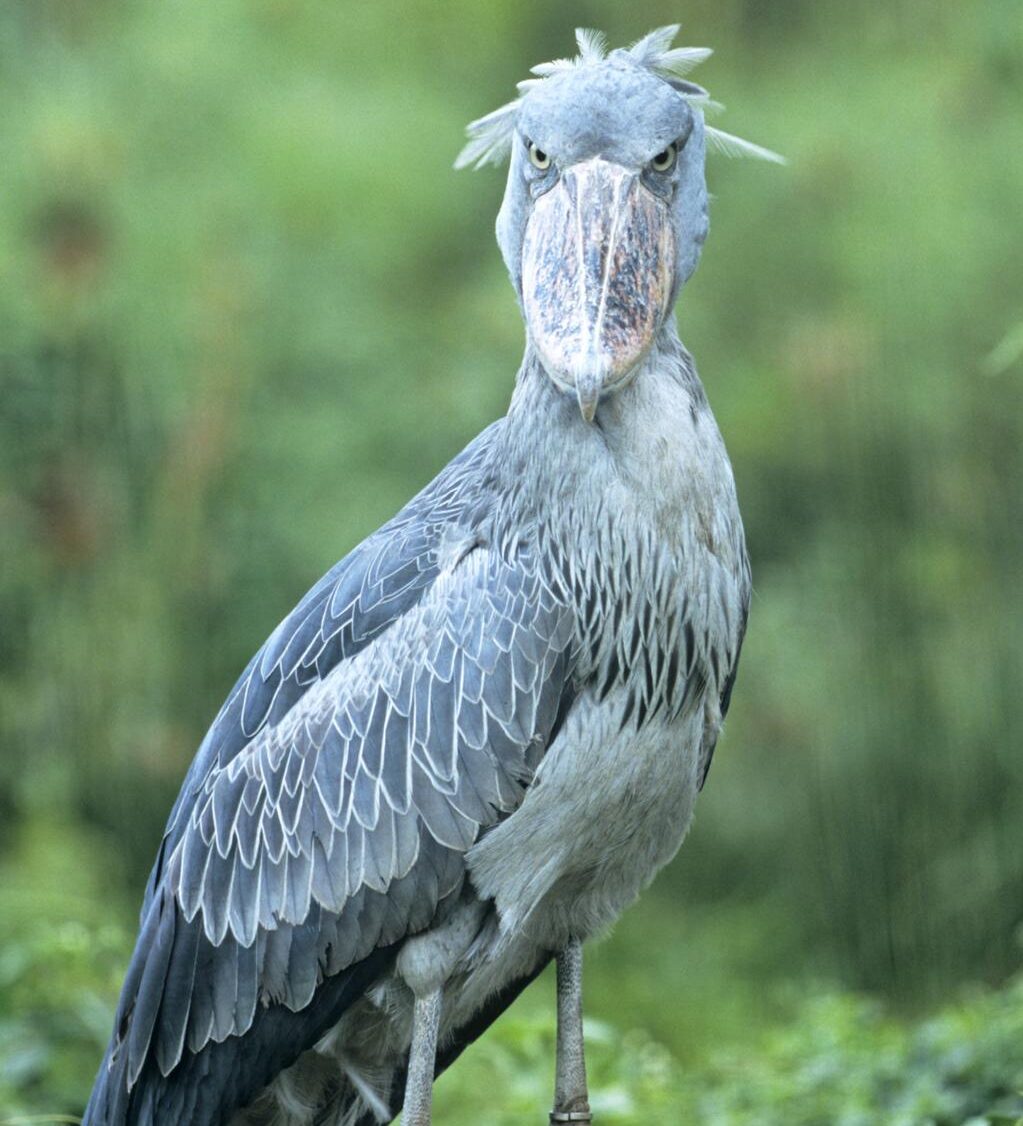
The Shoebill is the bird most visitors hope to find at Mabamba.
It is easily recognized by its enormous bill, tall body and distinctive appearance. The bird is associated with wetlands and often spends long periods standing quietly in shallow water while waiting for prey.
Finding a Shoebill is therefore partly about patience.
Your guide will search likely areas of the wetland and carefully watch the vegetation and open water. When a bird is located, the canoe can approach carefully while maintaining a respectful distance.
A sighting may last only a few minutes, or you may be fortunate enough to watch a Shoebill standing in one location for much longer.
Because it is a wild animal, however, a Shoebill sighting cannot be guaranteed.
How the Mabamba Canoe Experience Works
One of the most memorable parts of the trip is the canoe excursion.
After reaching the Mabamba area, you meet your local guide and board a canoe. The canoe then moves slowly through the shallow channels and vegetation.
The quiet nature of the canoe is useful for birdwatching because you are able to move through the wetland without the noise associated with a safari vehicle.
Your guide will help identify birds and explain the wetland environment.
For photographers, the canoe also creates opportunities to photograph birds against the papyrus and Lake Victoria landscape.
What Other Birds Can You See at Mabamba?
Although the Shoebill is the main target, Mabamba is much more than a one-bird destination.
Depending on the season and conditions, birdwatchers may encounter species such as:
- African fish eagle
- African jacana
- Pied kingfisher
- Malachite kingfisher
- Grey heron
- Egrets
- Cormorants
- Purple swamphen
- Other wetland and water-associated birds
The exact birds seen during your excursion will depend on weather, water levels, season and bird movements.
This is why it is worth bringing binoculars even if your main goal is the Shoebill.
What Is the Best Time to Visit Mabamba?
Mabamba can be visited throughout the year, but birdwatching conditions can change with the seasons.
Early morning is generally preferred because temperatures are more comfortable and the wetland is quieter.
If your primary goal is photography, morning light can also provide attractive conditions for photographing birds and the surrounding wetland.
Rather than focusing only on a particular month, it is useful to plan your visit around your overall Uganda itinerary and allow enough time for a patient Shoebill search.
How Early Should You Leave Entebbe?
An early start is recommended for a Mabamba Shoebill Birdwatching Tour from Entebbe.
Your exact departure time depends on your hotel, the season and the arrangements with your guide, but starting early gives you more time at the wetland.
This is particularly useful for birdwatchers who want to explore beyond a quick Shoebill search.
Your tour operator can arrange pickup directly from your hotel or another agreed location in Entebbe.
How Long Does the Tour Take?
A Mabamba excursion can comfortably be organized as a full-day experience from Entebbe.
The exact duration depends on your transport arrangements and how long you spend on the canoe.
Serious birdwatchers may want to spend more time exploring the wetland, while travelers with limited time can focus primarily on the Shoebill search.
If you have an international flight on the same day, make sure your tour operator plans the return journey around your check-in time.
Is the Shoebill Guaranteed?
No.
This is one of the most important things to understand before booking a Mabamba birdwatching tour.
The Shoebill is a wild bird, and its location changes. Local guides know the wetland and areas where Shoebills are regularly encountered, but there is no guarantee that a particular bird will be present on the day of your visit.
A good birdwatching experience should therefore be viewed as a search rather than a guaranteed wildlife encounter.
The wetland itself is part of the experience, and you may see numerous other birds during the search.
What Should You Bring to Mabamba?
A few simple items can make the experience more comfortable.
Binoculars
Binoculars are one of the most useful things to carry. They allow you to observe birds without getting too close.
Camera
A camera with a telephoto lens is ideal if you want detailed Shoebill photographs.
Hat and Sunscreen
Parts of the canoe route may be exposed to sunlight, so sun protection is recommended.
Insect Repellent
Because Mabamba is a wetland environment, insect repellent can be useful.
Rain Jacket
Uganda’s weather can change quickly, so carrying a lightweight rain jacket is sensible.
Comfortable Clothing
Lightweight clothing and comfortable footwear are recommended for the excursion.
Is Mabamba Good for Bird Photographers?
Yes. Mabamba can be particularly interesting for photographers because the canoe allows you to explore the wetland at a slow pace.
The Shoebill is obviously the main photographic target, but other birds can also provide opportunities.
Photographers should carry extra batteries and memory cards, particularly if they plan to spend several hours on the water.
A telephoto lens is useful because wild birds should be observed and photographed from a respectful distance.
Mabamba or a Traditional Uganda Safari?
The two experiences are quite different.
A traditional Uganda wildlife safari focuses on mammals and larger landscapes. You might spend hours searching for elephants, lions, buffaloes, giraffes and other wildlife from a safari vehicle.
Mabamba focuses primarily on wetland birds.
If you are a dedicated birdwatcher, the canoe experience provides a different perspective of Uganda’s natural environment.
It can also be added to a longer Uganda safari without requiring several additional days.
Can Mabamba Be Combined With an Entebbe Tour?
Yes.
Travelers staying in Entebbe can potentially combine Mabamba with selected activities depending on their available time.
For example, a traveler arriving in Uganda could arrange a Mabamba excursion before continuing with a longer safari.
Similarly, travelers finishing a safari around Entebbe can use Mabamba as a final birdwatching experience before their departure.
The schedule should always be planned carefully if an international flight is involved.
Can You Visit Mabamba From Kampala?
Yes.
Although Entebbe is a more convenient base, a private Mabamba Shoebill Birdwatching Tour from Entebbe can also be extended to travelers staying in Kampala.
The journey from Kampala takes longer, so an early departure is recommended.
For travelers who are already staying in Entebbe, however, starting from Entebbe makes the day more relaxed.
Why Use a Local Guide?
A local wetland guide is an important part of the Mabamba experience.
The wetland contains numerous channels and areas of vegetation, and knowing where to search can make a major difference.
Local guides also help visitors understand the wetland and its birdlife while supporting community-based tourism around Mabamba.
Instead of simply arriving and looking around independently, a guided canoe excursion gives you a more structured birdwatching experience.
Responsible Birdwatching at Mabamba
Responsible tourism is important when visiting wetlands.
Visitors should avoid making excessive noise, chasing birds or attempting to get unnecessarily close to wildlife.
Photographers should be particularly careful not to disturb birds while trying to obtain a photograph.
Following the instructions of your local guide helps protect the wetland environment and contributes to a better experience for future visitors.
Frequently Asked Questions
Where is Mabamba Swamp?
Mabamba Swamp is located on the northern shores of Lake Victoria in Uganda, close to Entebbe.
What is Mabamba famous for?
Mabamba is particularly famous for the Shoebill Stork and is considered one of Uganda’s notable locations for searching for this wetland bird.
Can I visit Mabamba in one day?
Yes. Mabamba is well suited to a one-day excursion from Entebbe.
How do you explore Mabamba Swamp?
The wetland is explored primarily by canoe through its shallow channels, accompanied by a local guide.
Can I see the Shoebill from Entebbe?
Yes. You can arrange a day trip from Entebbe to Mabamba specifically to search for the Shoebill.
Is Mabamba suitable for beginners?
Yes. You do not need to be an expert birder to enjoy the experience. A local guide can help identify birds and explain what you are seeing.
What happens if I don’t see a Shoebill?
The Shoebill is a wild bird and cannot be guaranteed. However, Mabamba supports many other wetland birds, so the canoe excursion can still provide a rewarding birdwatching experience.
Can I combine Mabamba with a Uganda safari?
Yes. Mabamba can be incorporated into a longer Uganda itinerary, particularly for travelers starting or ending their trip around Entebbe or Kampala.
Book a Mabamba Shoebill Birdwatching Tour from Entebbe
A Mabamba Shoebill Birdwatching Tour from Entebbe offers a convenient introduction to Uganda’s wetlands and one of its most famous birds.
The combination of an early start, a guided canoe ride and a patient search through the papyrus channels makes Mabamba different from the typical Uganda safari.
If you are staying in Entebbe and have a free day, this is an experience worth considering for your Uganda itinerary.
Berengei Africa Safaris can arrange a private Mabamba birdwatching experience with transportation from Entebbe, a local wetland guide and canoe excursion.
Contact us to check availability and plan your Shoebill birdwatching experience.