Juvenile Mountain Gorillas: Growth, Behavior, Diet and Life.
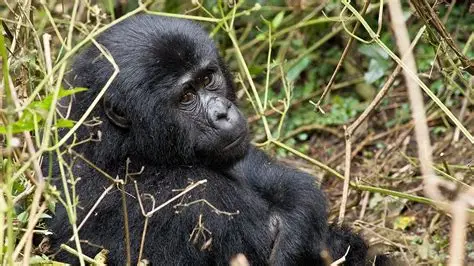
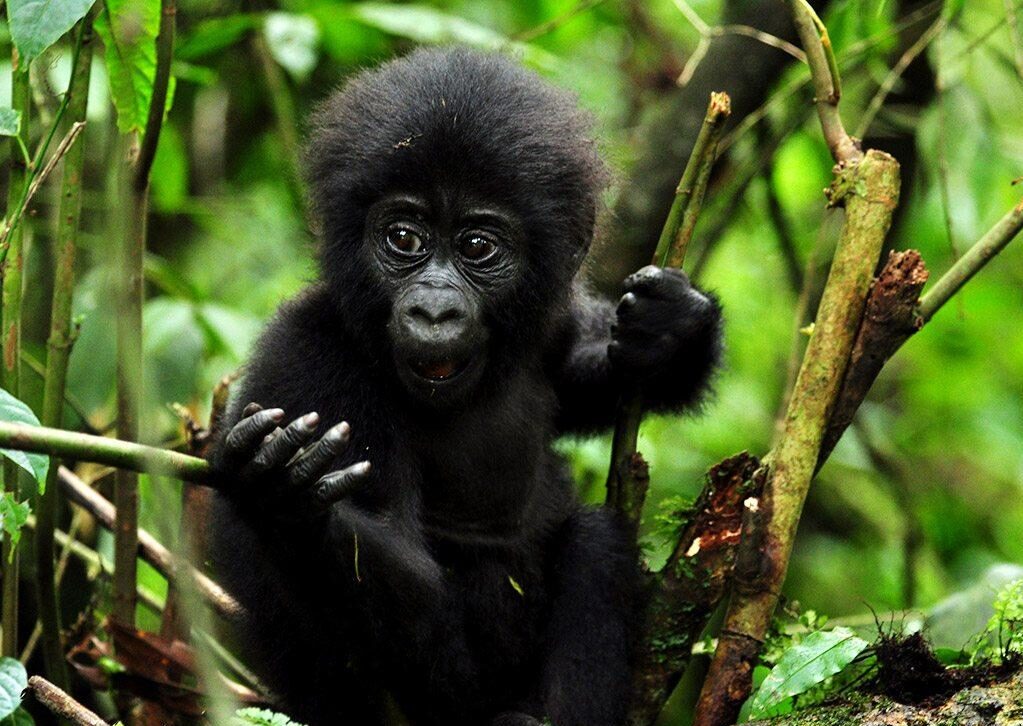
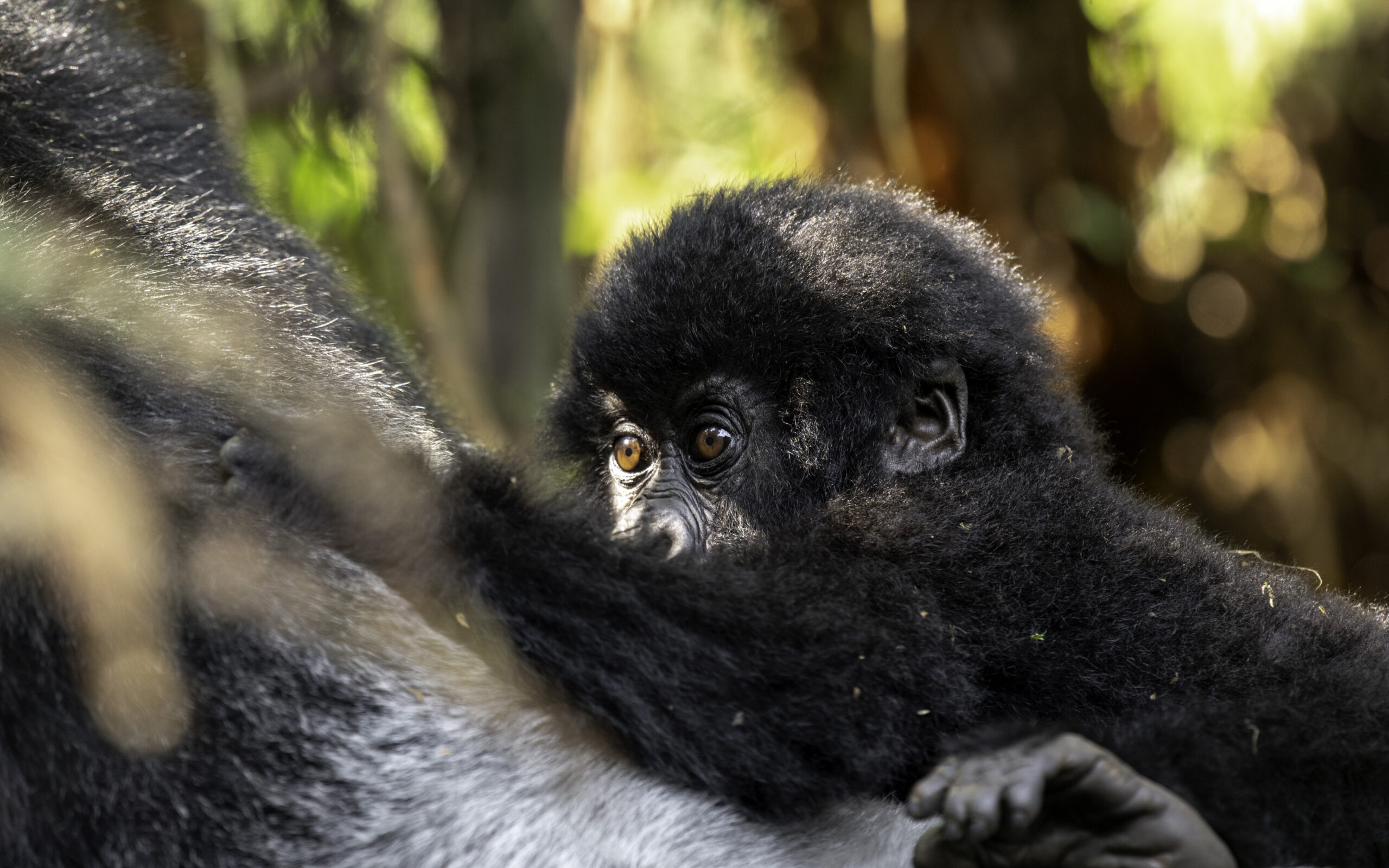
Juvenile mountain gorillas are among the most fascinating members of a gorilla family. At this stage of life, young gorillas are becoming more independent while still learning important survival skills from their mothers, siblings, silverback, and other members of the group.
Mountain gorillas (Gorilla beringei beringei) live in close-knit family groups in the forests of Uganda, Rwanda, and the Democratic Republic of Congo.
Watching a juvenile gorilla climb, play, explore, and interact with other gorillas can be one of the most memorable experiences during a gorilla trekking adventure.
But what exactly is a juvenile mountain gorilla? How old is it, what does it eat, and how does it behave within the gorilla family?
What Is a Juvenile Mountain Gorilla?
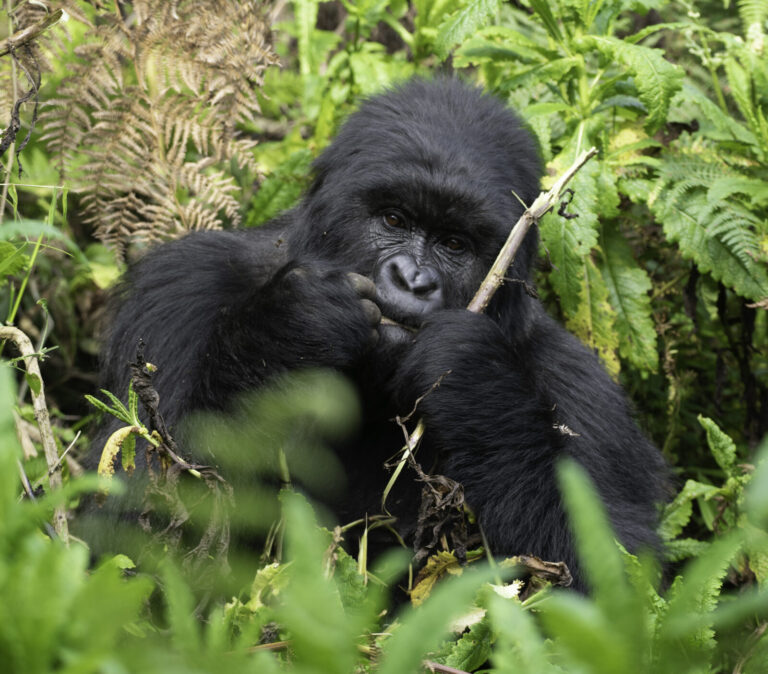
A juvenile mountain gorilla is a young gorilla that has moved beyond infancy but has not yet reached adulthood. Juveniles are generally more independent than infants, although they continue to rely on their mothers and the wider family for protection, learning, and social development.
During the juvenile stage, mountain gorillas develop stronger bodies, learn how to find and process different foods, and become increasingly involved in the social life of the group.
This is also a period when young gorillas spend a great deal of time playing and exploring their surroundings.
How Old Is a Juvenile Mountain Gorilla?
The exact age classification can vary depending on the scientific or conservation context. Generally, the juvenile stage follows infancy and continues until the gorilla approaches adolescence.
Young mountain gorillas develop gradually rather than suddenly. During these years, they transition from depending heavily on their mothers to becoming increasingly independent members of the family.
As they grow, juveniles gradually develop:
- Greater independence from their mothers
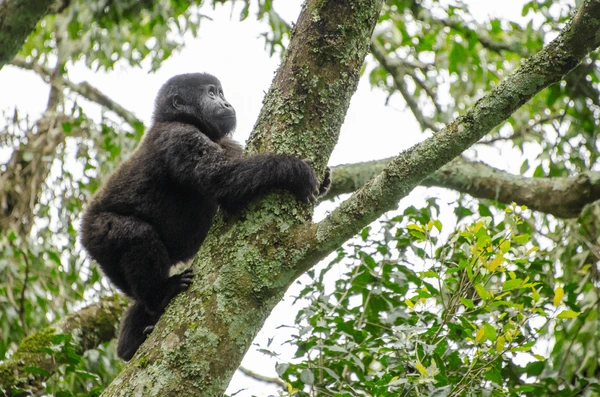
- Stronger climbing and movement abilities
- More complex social behavior
- Improved feeding skills
- Greater awareness of their surroundings
- Stronger relationships with other members of the group
Eventually, juveniles enter adolescence and begin experiencing the physical and social changes associated with adulthood.
How Do Juvenile Mountain Gorillas Behave?
One of the most noticeable characteristics of juvenile mountain gorillas is their playful behavior.
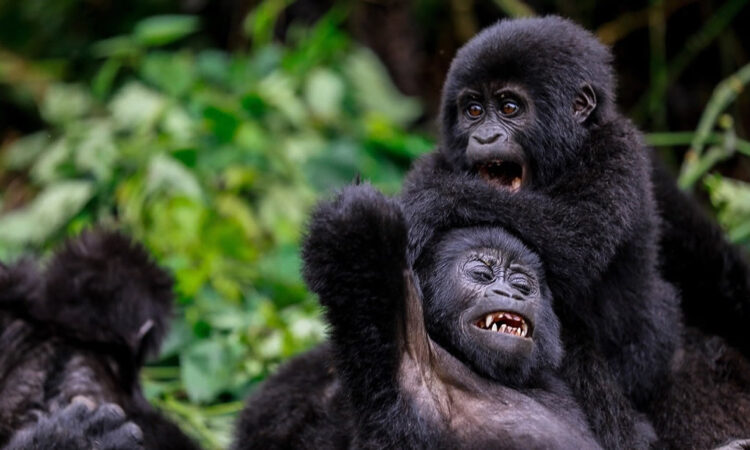
Juveniles may chase one another, wrestle, climb vegetation, roll on the forest floor, or interact with older members of the group. These activities are not simply entertainment. Play helps young gorillas develop physical coordination and learn important social skills.
A juvenile mountain gorilla may also imitate adults. Young gorillas learn by observing what older members of the family do, including feeding, moving through the forest, communicating, and interacting with other gorillas.
Playing With Other Gorillas
Play is particularly important for juvenile gorillas.
Through play, young gorillas can practice:
- Coordination
- Strength
- Balance
- Social interaction
- Communication
- Boundaries within the group
Juvenile gorillas often have playmates within their family, especially other young gorillas close to their age.
What Do Juvenile Mountain Gorillas Eat?
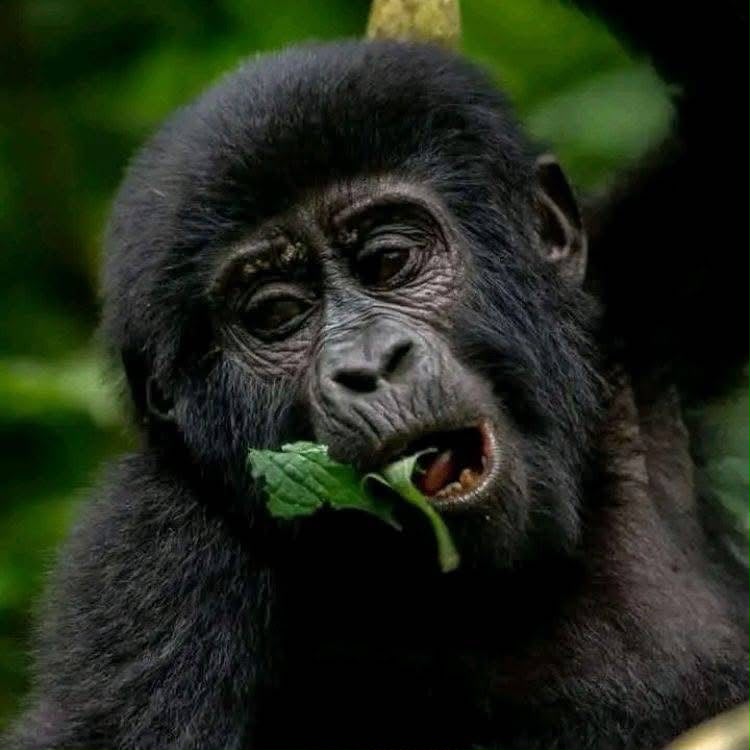
Juvenile mountain gorillas gradually develop the ability to eat many of the same foods consumed by adults.
Their diet consists primarily of vegetation, including leaves, stems, shoots, bark, flowers, and other available plant material. They may also consume small amounts of other natural foods found within their forest habitat.
Young gorillas initially depend heavily on their mothers for milk. As they grow, they progressively increase the amount of solid food they consume.
This transition allows juveniles to develop the feeding skills they will need as adults.
The Relationship Between a Juvenile Gorilla and Its Mother
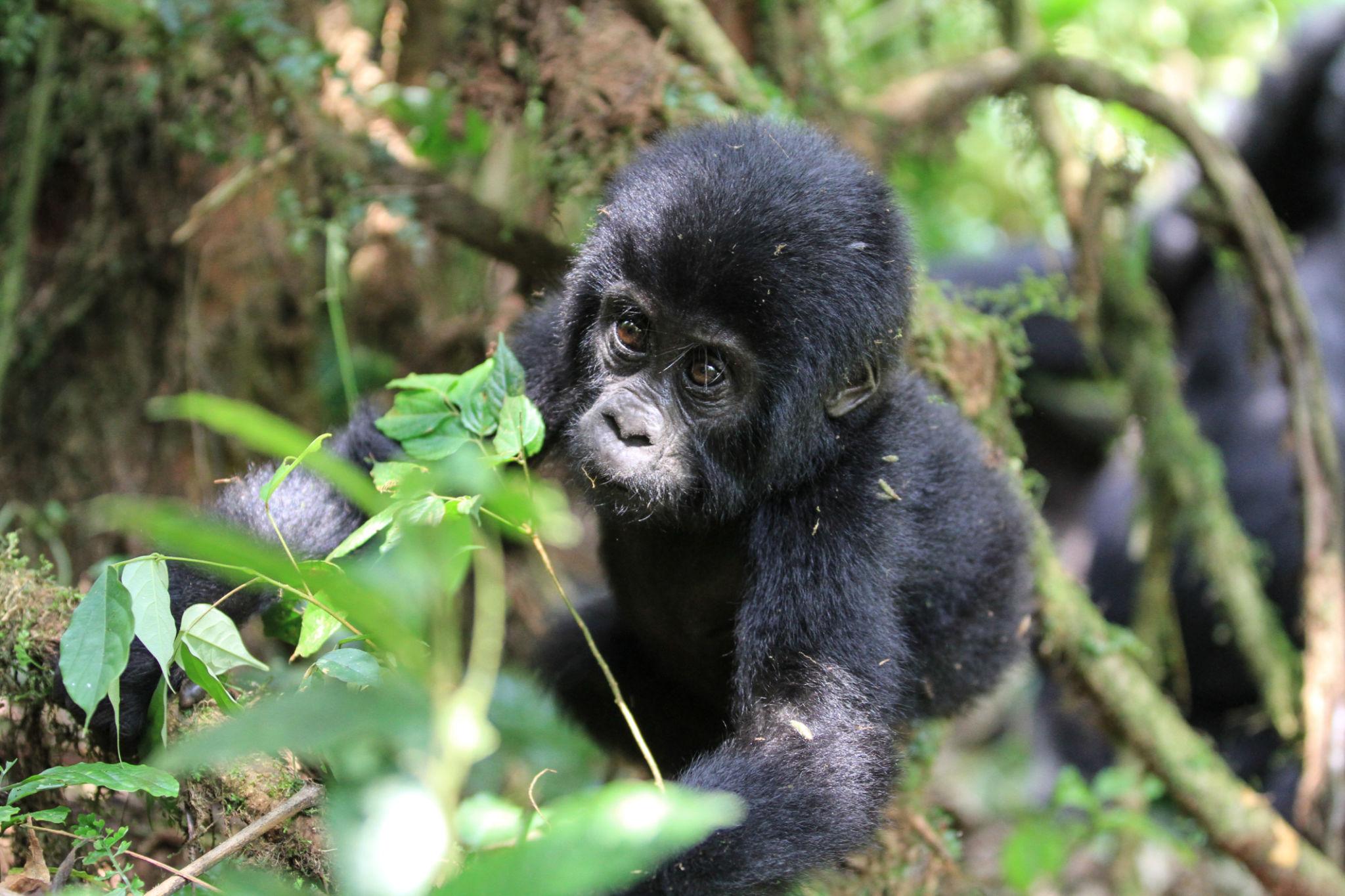
The mother plays an important role in a young gorilla’s development.
Although juveniles are considerably more independent than infants, mothers continue to provide protection, guidance, and social support. Young gorillas may remain close to their mothers, particularly when they are tired, uncertain, or when the group encounters a potentially threatening situation.
The relationship between mother and offspring is therefore important throughout the early stages of a mountain gorilla’s life.
The Role of the Silverback
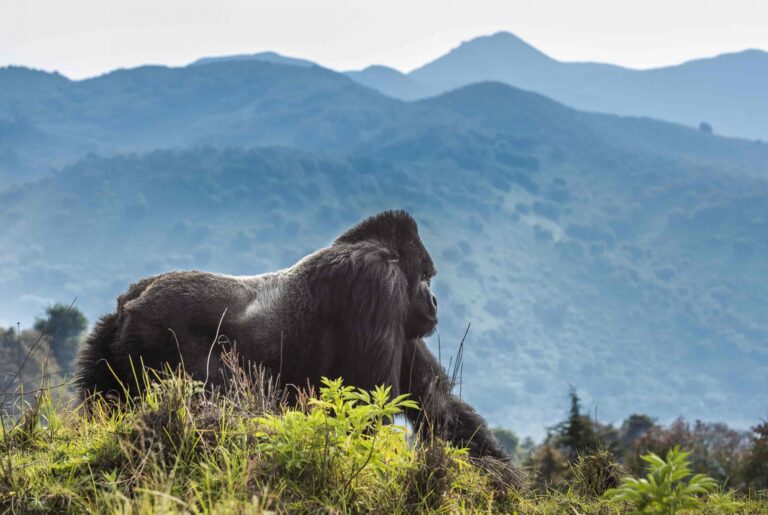
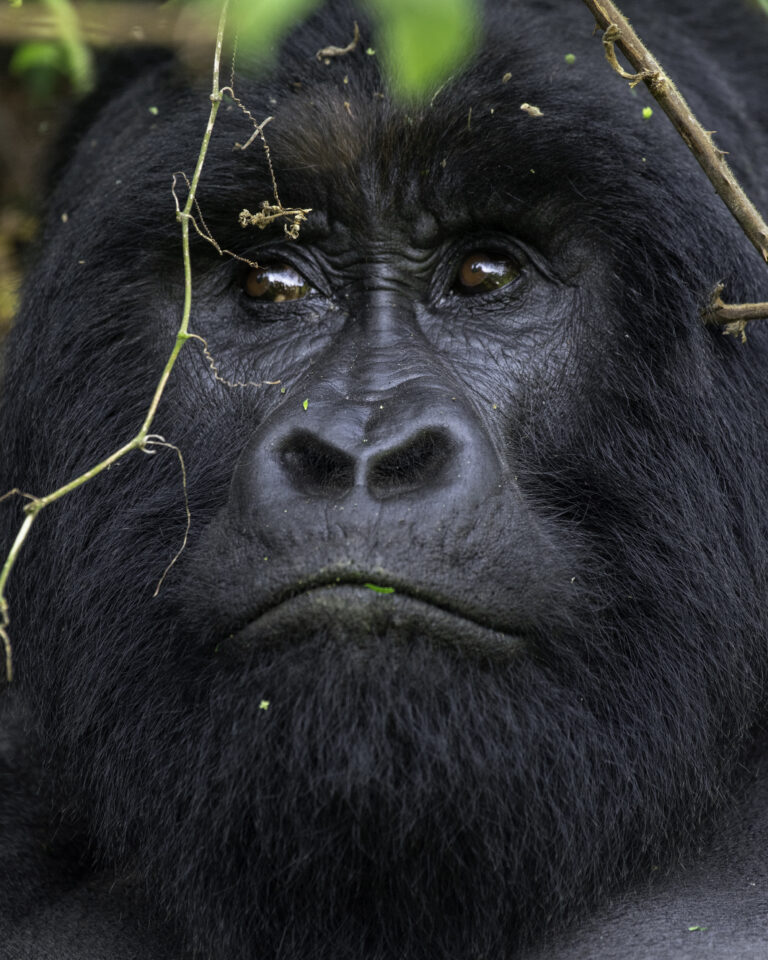
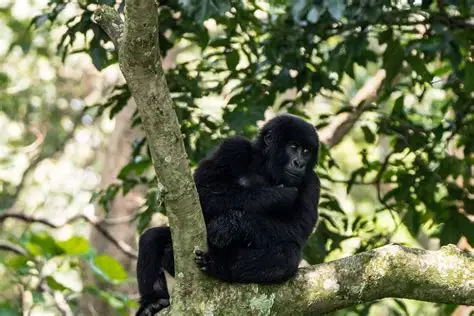
The silverback is an important figure within a mountain gorilla family.
A mature male silverback generally provides leadership and protection for the group. He may intervene during conflicts, determine group movements, and respond to potential threats.
For juvenile mountain gorillas, living within a stable family group provides an opportunity to learn social behavior while benefiting from the protection of older members.
The silverback is not necessarily the biological father of every young gorilla in the group, but his role as the group’s leader can be extremely important.
How Juvenile Gorillas Learn
Much of a juvenile mountain gorilla’s development happens through observation and interaction.
Young gorillas learn by watching adults and experimenting themselves. A juvenile may observe an adult feeding on a particular plant and later attempt to eat the same type of vegetation.
They also learn how to communicate, move through the forest, interact appropriately with other group members, and respond to different situations.
This makes the gorilla family an important natural learning environment.
Juvenile Gorillas and Social Development
Mountain gorillas are highly social animals, and juveniles spend much of their lives surrounded by other members of their family.
Social interactions help young gorillas understand their position within the group. They gradually learn which behaviors are acceptable and how to interact with different individuals.
This social development continues as they approach adolescence.
For researchers and conservationists, observing these interactions can provide valuable information about mountain gorilla behavior and family dynamics.
Can You See Juvenile Mountain Gorillas During Gorilla Trekking?
Yes. Visitors participating in gorilla trekking in Uganda, Rwanda, or the Democratic Republic of Congo may encounter juvenile mountain gorillas when trekking to a habituated gorilla family.
However, seeing a juvenile gorilla is never guaranteed. Gorilla families move through their natural forest habitat, and their location can change from day to day.
When trekkers encounter a gorilla family, it is important to follow the instructions of the guides and park authorities. Visitors should remain calm, maintain the required distance, avoid sudden movements, and never attempt to touch the gorillas.
The goal of gorilla trekking is to observe these incredible animals without disturbing their natural behavior.
Juvenile Gorillas During Gorilla Trekking in Bwindi
Bwindi Impenetrable National Park in southwestern Uganda is one of the world’s important habitats for mountain gorillas. The forest is home to habituated gorilla families that can be visited by tourists participating in regulated gorilla trekking experiences.
Seeing a juvenile mountain gorilla in Bwindi can be particularly exciting because juveniles are often active and curious. Their playful movements can make them easier to notice than quieter adults.
However, trekkers should remember that these are wild animals. Their behavior should always be observed respectfully and without interference.
Why Juvenile Mountain Gorillas Are Important for Conservation
Juvenile mountain gorillas represent the future of the species.
Their survival is important because healthy young gorillas eventually become adults and contribute to the continued growth and stability of mountain gorilla populations.
Conservation programs in the Virunga Massif and Bwindi region focus on protecting gorilla habitat, monitoring gorilla families, supporting local communities, and reducing threats to these endangered primates.
Responsible tourism also contributes to conservation by generating revenue and supporting activities that protect gorillas and their habitats.
Juvenile Mountain Gorilla vs Infant Gorilla
It is easy to confuse an infant and a juvenile mountain gorilla, but there are important differences.
Infant gorillas are highly dependent on their mothers. They spend much of their time close to their mothers and require considerable parental care.
Juvenile gorillas, on the other hand, are more independent. They can move around the forest more confidently, eat a wider variety of foods, and participate actively in social interactions and play.
The transition from infant to juvenile is therefore an important part of a gorilla’s development.
Frequently Asked Questions About Juvenile Mountain Gorillas
How old is a juvenile mountain gorilla?
Juvenile mountain gorillas are young gorillas that have moved beyond infancy but have not yet reached adulthood. The exact age range can vary depending on the classification used by researchers.
Do juvenile gorillas play?
Yes. Play is an important part of juvenile gorilla development. It helps young gorillas develop physical coordination and social skills.
What do juvenile mountain gorillas eat?
They primarily eat vegetation such as leaves, stems, shoots, bark, and other plant materials available in their forest habitat.
Do juvenile gorillas stay with their mothers?
Yes. Although juveniles become increasingly independent, they generally remain within their family group and continue interacting closely with their mothers.
Can tourists see juvenile gorillas?
Yes. Tourists may encounter juvenile gorillas while trekking habituated mountain gorilla families. However, sightings of particular individuals cannot be guaranteed.
Are juvenile mountain gorillas dangerous?
Juvenile gorillas are generally not considered a threat to tourists when encountered during properly managed gorilla trekking. Visitors should nevertheless follow their guide’s instructions and never attempt to approach or touch a gorilla.
Inconclusion therefore…
Juvenile mountain gorillas are an important part of the gorilla family and offer a fascinating glimpse into how these endangered primates grow and develop. From playful interactions to learning how to feed and communicate, juveniles spend their early years developing the skills they need for adulthood.
For travelers visiting Uganda, Rwanda, or the Democratic Republic of Congo, encountering a juvenile mountain gorilla during a responsible gorilla trekking experience can be an unforgettable moment. Their playful behavior and interactions with other family members help demonstrate the complex social lives of mountain gorillas.
If you are planning a gorilla trekking adventure in Uganda, Berengei Africa Safaris can help you plan your journey to Bwindi Impenetrable National Park and experience the remarkable world of mountain gorillas responsibly.