Infant Gorillas: Everything You Need to Know About Baby Mountain Gorillas
Infant gorillas are among the most fascinating members of a mountain gorilla family. From their first days in the forest to the time they begin exploring, playing, and interacting with other members of the group, baby gorillas go through important stages of development under the protection of their mothers and the wider family.
For travelers planning a gorilla trekking experience in Uganda or Rwanda, seeing a young gorilla can be one of the most memorable parts of the encounter.
However, infant gorillas are not simply small versions of adult gorillas. They have unique behaviors, physical characteristics, and social needs that make them an important part of the gorilla family.
What Is an Infant Gorilla?
An infant gorilla is a young gorilla that is still dependent on its mother for protection, food, transportation, and care.
Mountain gorillas live in close-knit social groups, and infant gorillas grow up surrounded by other members of their family.
The mother is usually the infant’s primary caregiver, while other gorillas may also interact with and protect the young animal.
At birth, a mountain gorilla infant is very small compared with an adult. As it grows, it gradually becomes stronger, more independent, and increasingly interested in its surroundings.
How Are Baby Gorillas Born?
Gorillas are mammals, meaning females give birth to live young.
A female mountain gorilla normally gives birth to one infant at a time. Twins are possible but extremely rare.
After birth, the infant remains closely attached to its mother. During the earliest stage of life, the mother carries the baby and keeps it close to her body while moving through the forest.
This close relationship is essential because a newborn gorilla cannot move independently or protect itself.
What Do Infant Gorillas Look Like?
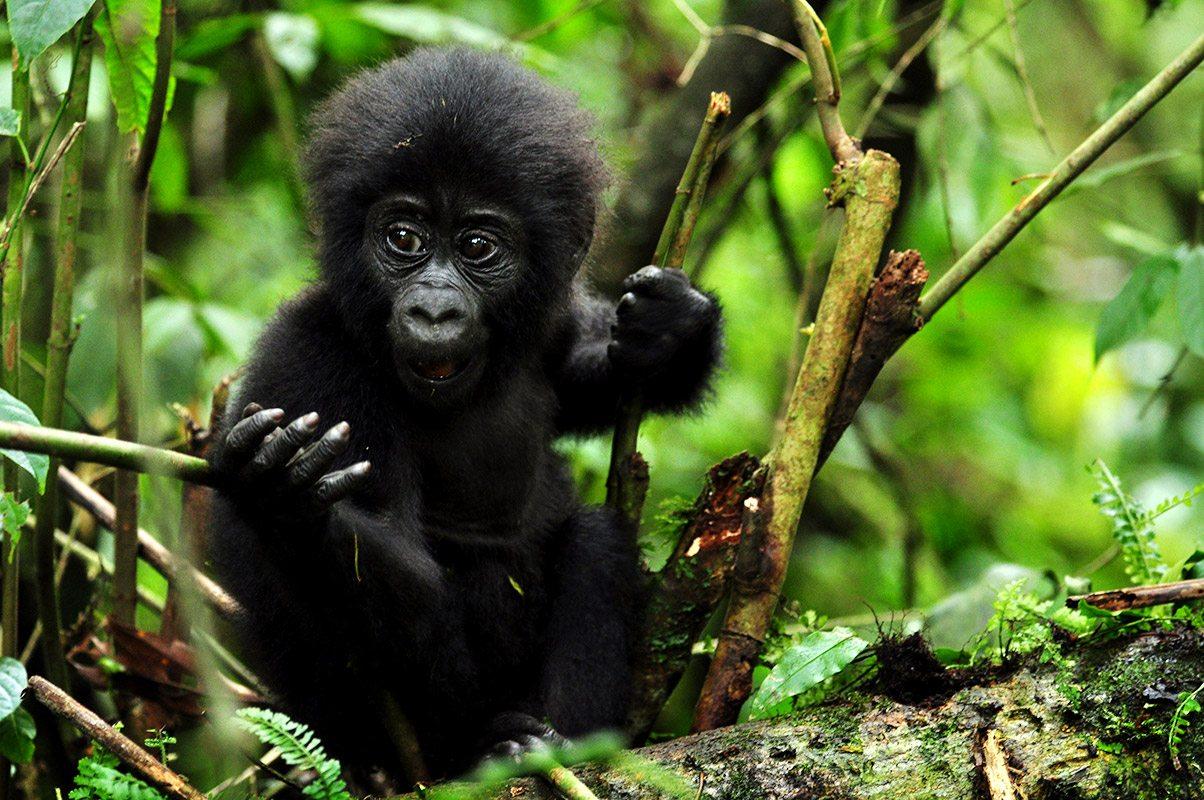
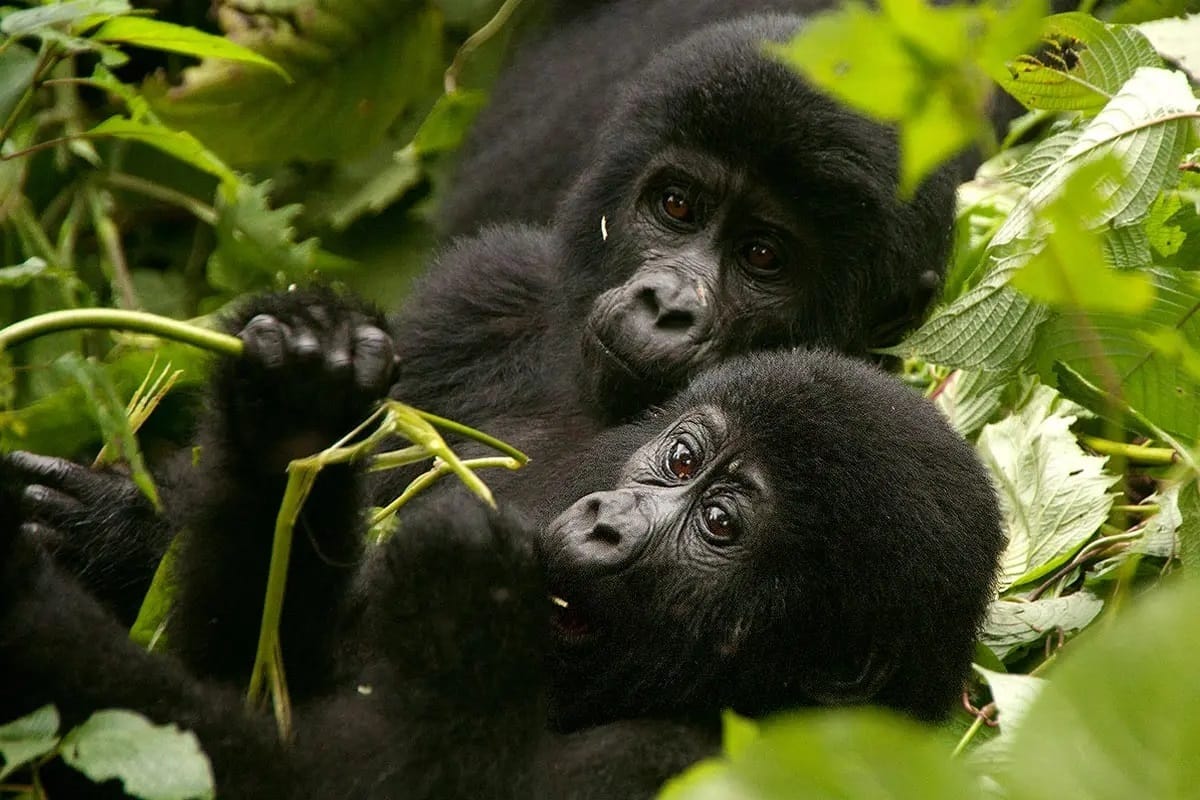
Baby gorillas look noticeably different from fully grown adults.
They are much smaller, have softer features, and lack the large body size and muscular appearance of mature gorillas.
As they grow, their bodies become stronger and their facial features begin to resemble those of adult gorillas.
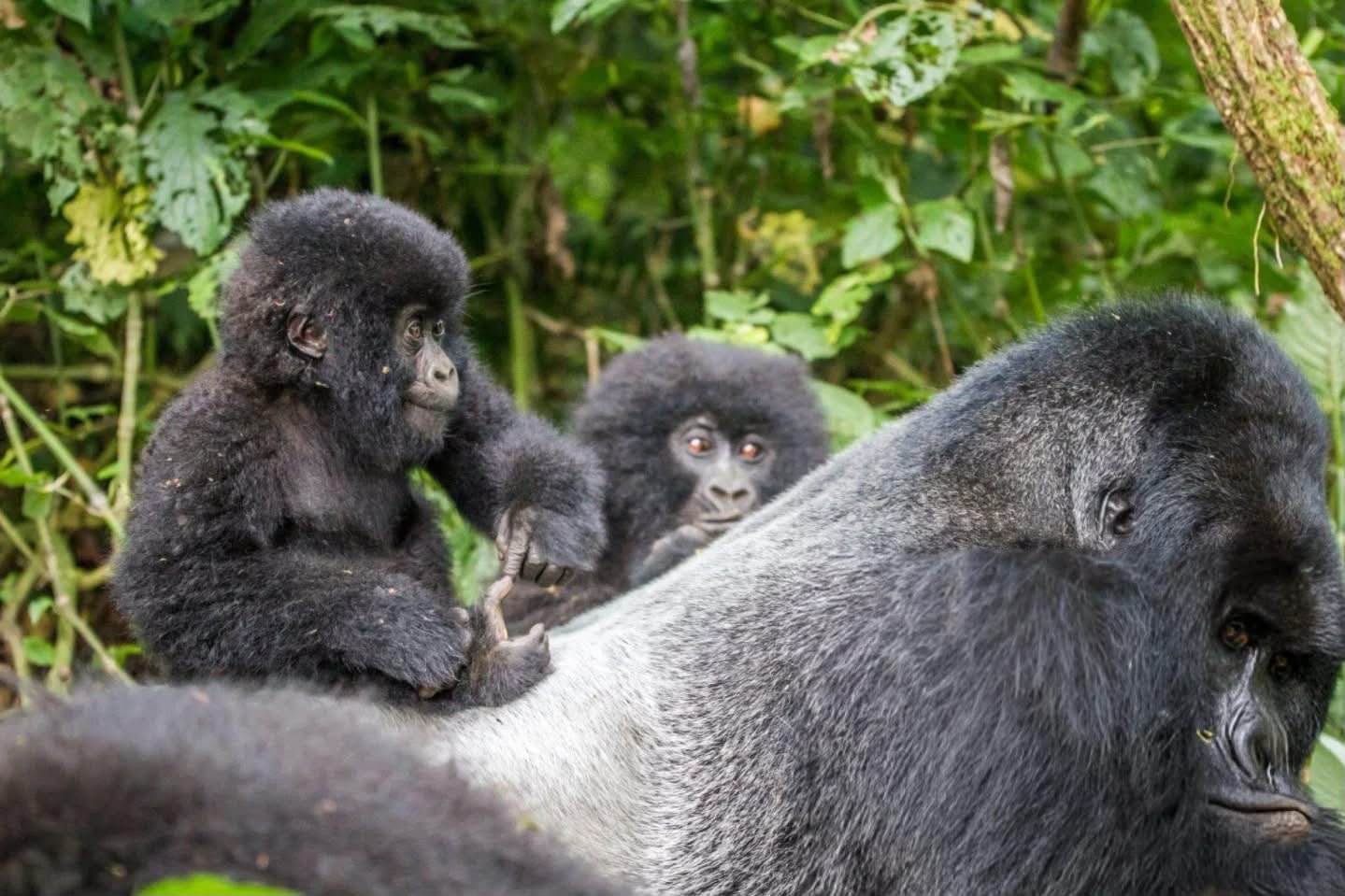
Male gorillas eventually undergo major physical changes as they mature. Adult males can develop the characteristic silver hair across their back, which is why mature males are commonly called silverbacks.
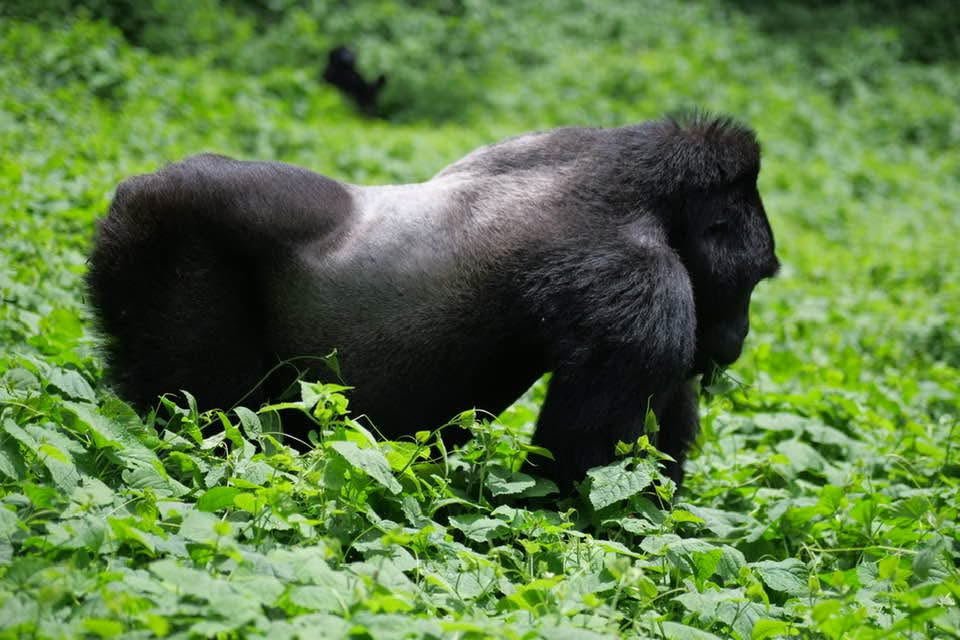
An infant does not have this adult silverback appearance.
How Do Mother Gorillas Care for Their Babies?
Mother gorillas play a central role in the survival and development of their infants.
A mother may:
- Carry her infant through the forest
- Keep the baby close while resting
- Protect it from potential dangers
- Help it learn how to move through the forest
- Provide milk during early development
- Maintain close physical contact
- Respond to the infant’s calls and movements
The bond between mother and infant is particularly important during the early months of life.
When Do Baby Gorillas Start Moving on Their Own?
Infant gorillas gradually become more independent as their muscles and coordination develop.
At first, the baby depends heavily on its mother for transportation. Later, it begins to hold onto vegetation, crawl, climb, and explore short distances around the family.
As the infant becomes stronger, play becomes an increasingly important part of its development.
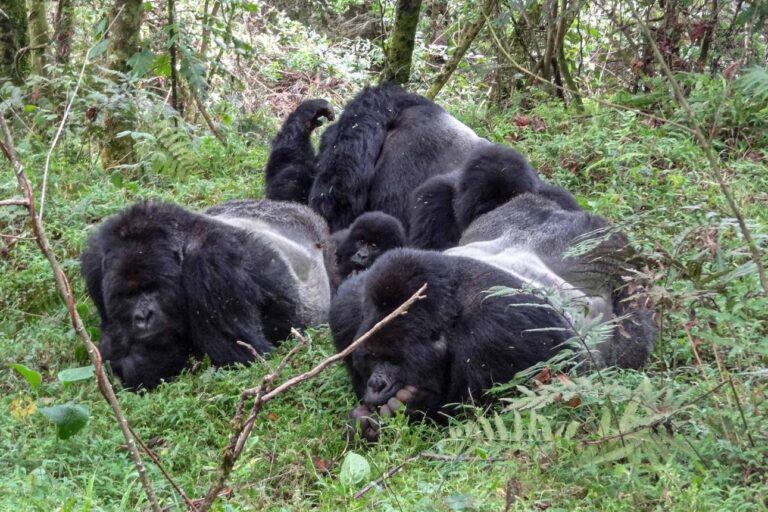
Visitors on a gorilla trekking safari may sometimes see young gorillas moving around their mothers, climbing vegetation, or interacting with other young members of the group.
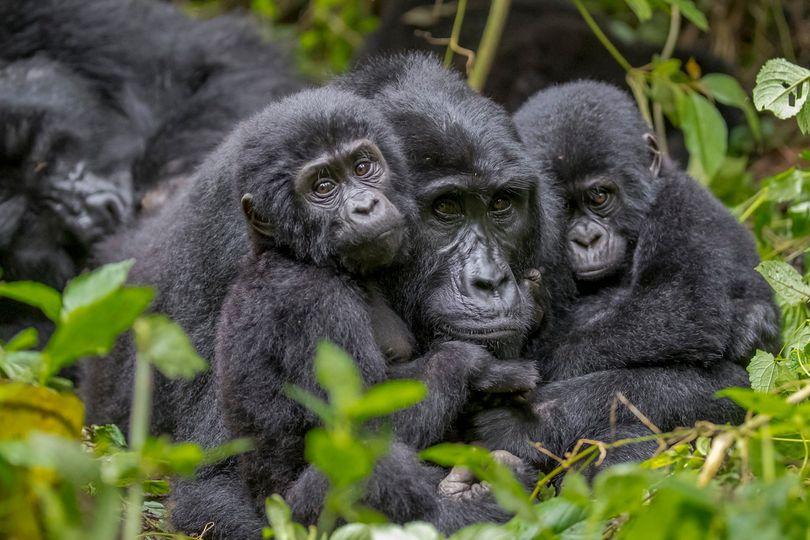
Do Infant Gorillas Play?
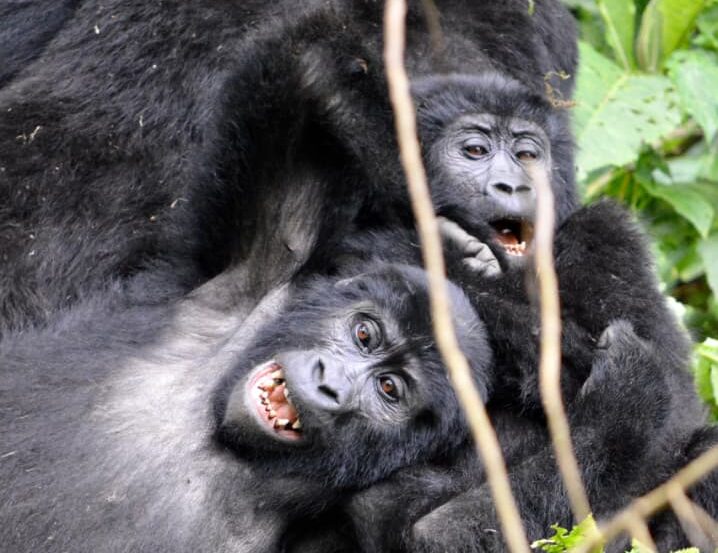
Yes. Infant gorillas and young gorillas are highly playful.
Play helps young gorillas develop physical coordination and social skills.
They may chase one another, climb, wrestle gently, grab vegetation, or interact with older members of the family.
Through these interactions, young gorillas learn how to communicate and behave within their social group.
Play is therefore more than entertainment. It is part of the learning process that prepares young gorillas for life within the family.
What Do Infant Gorillas Eat?
Newborn gorillas depend heavily on their mothers’ milk during the earliest stage of life.
As they grow, young gorillas gradually begin eating solid foods.
Mountain gorillas primarily consume vegetation, including leaves, shoots, stems, flowers, and other plant material. Their diet can vary depending on what is available in their forest habitat.
Young gorillas learn what to eat by observing their mothers and other members of the group.
How Long Do Infant Gorillas Stay With Their Mothers?
Infant gorillas remain closely associated with their mothers during their early development.
The mother provides protection and care while the young gorilla gradually develops the ability to move, feed, and interact independently.
Even after an infant becomes more independent, the relationship with its mother remains important.
The exact timing of developmental stages can vary between individual gorillas.
How Do Infant Gorillas Communicate?
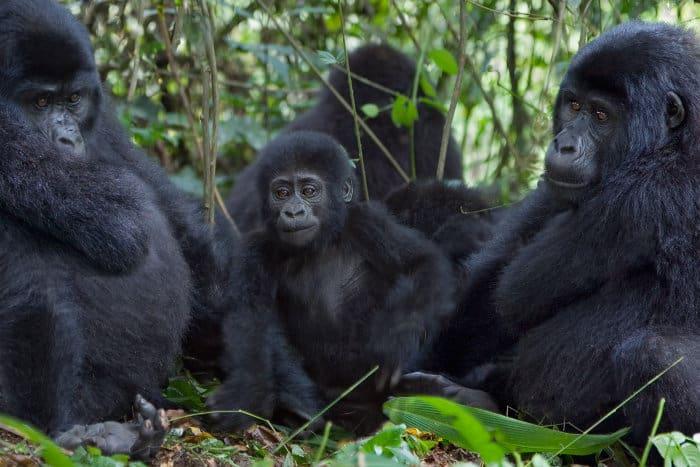
Gorillas use a variety of sounds, body movements, facial expressions, and physical interactions to communicate.
An infant may make sounds when it wants attention, is uncomfortable, or is interacting with its mother.
As young gorillas grow, they learn how to interpret the communication signals used by other members of their family.
This early social learning is important because gorillas live in complex groups with established relationships and social structures.
Do Other Gorillas Protect Infant Gorillas?
Yes. Although the mother is the primary caregiver, infant gorillas live within a larger social group.
Other members of the family may interact with the infant, and the presence of a dominant silverback can provide protection for the group.
The silverback generally plays an important role in defending the family from threats and maintaining group cohesion.
This means an infant gorilla grows up as part of a wider social community rather than in isolation.
How Do Infant Gorillas Learn From the Family?
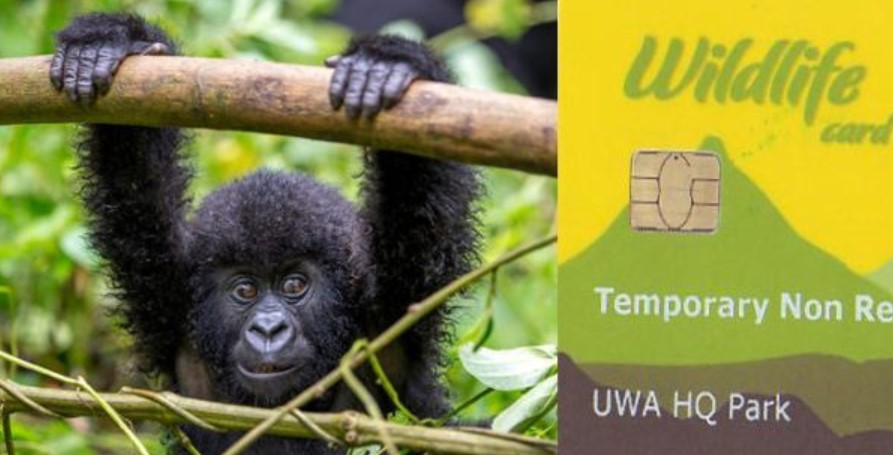
Young gorillas learn by watching and interacting with other members of their group.
They gradually learn:
- How to move through the forest
- Which plants can be eaten
- How to communicate
- How to interact socially
- How to play
- How to respond to other gorillas
- How to become more independent
This learning process begins early and continues as the gorilla matures.
Can You See Infant Gorillas During Gorilla Trekking?
Yes, it is possible to see infant gorillas during gorilla trekking in Uganda or Rwanda.
However, wildlife encounters cannot be guaranteed. Gorilla families move freely through their natural forest habitat, and their location changes from day to day.
If the gorilla family you are assigned to has a young infant, you may have the opportunity to observe the baby while following the applicable gorilla trekking rules.
Visitors must always follow the instructions of their guides and trackers.
How Close Can You Get to an Infant Gorilla?
Although seeing a baby gorilla can be exciting, visitors must maintain the required distance from gorillas and follow the instructions given by wildlife authorities and guides.
You should never attempt to touch, feed, call, chase, or attract an infant gorilla.
Even when a baby gorilla moves toward visitors, travelers should remain calm and allow the animal to behave naturally.
Responsible tourism helps protect both the gorillas and the people visiting them.
Why Are Infant Gorillas Important to Conservation?
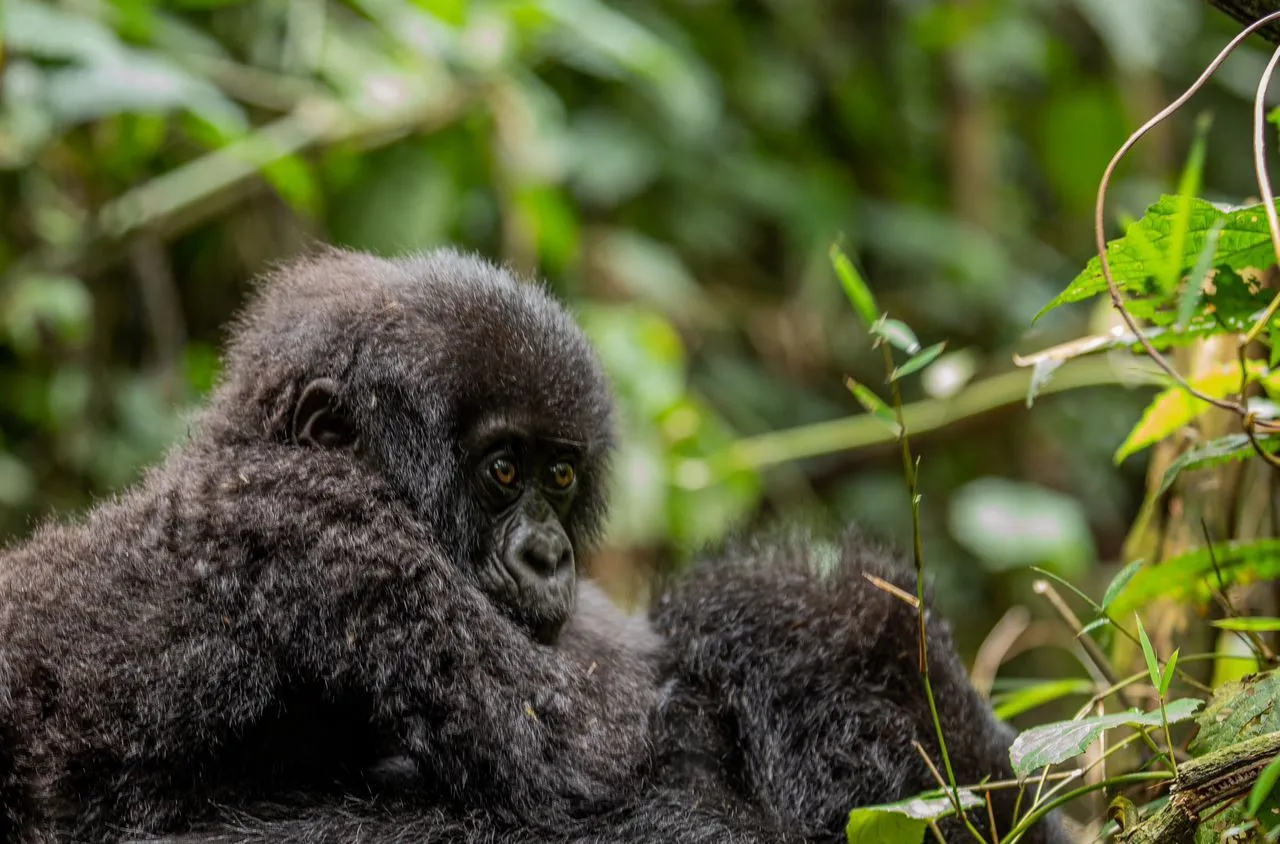
Every infant gorilla represents the continuation of a population that conservationists work hard to protect.
Mountain gorillas were once considered critically threatened, and long-term conservation efforts have helped improve their population.
Protecting gorilla habitat, supporting local communities, monitoring gorilla families, and managing responsible tourism all contribute to their conservation.
Gorilla tourism also provides an important economic incentive for protecting the forests where these animals live.
Infant Gorillas and Gorilla Trekking in Uganda
Uganda is one of the world’s best destinations for observing mountain gorillas in their natural environment.
Most gorilla trekking in Uganda takes place in Bwindi Impenetrable National Park, while Mgahinga Gorilla National Park also protects mountain gorillas.
Bwindi is divided into several tourism sectors, including Buhoma, Ruhija, Rushaga, and Nkuringo.
Because gorilla families are constantly moving through the forest, the presence and age of infants can vary between groups.
Infant Gorillas in Rwanda
Rwanda is another important destination for mountain gorilla tourism.
Gorilla trekking takes place in Volcanoes National Park, where visitors can encounter habituated gorilla families.
Just like in Uganda, young gorillas are born and raised within their natural social groups.
Seeing an infant gorilla in Rwanda can therefore provide a fascinating opportunity to observe the early stages of mountain gorilla development.
Frequently Asked Questions About Infant Gorillas
How big is a newborn gorilla?
A newborn mountain gorilla is very small compared with an adult and remains dependent on its mother during its early development.
Do baby gorillas stay with their mothers?
Yes. Infant gorillas remain closely dependent on their mothers during their early stages of life before gradually becoming more independent.
What do baby gorillas eat?
Newborns depend primarily on their mother’s milk. As they grow, they gradually begin eating vegetation and other foods available in their forest habitat.
Do baby gorillas play?
Yes. Play is an important part of young gorillas’ physical and social development.
Can you see baby gorillas while trekking?
Yes. Visitors may encounter infant gorillas when trekking a family that has young animals. However, sightings of particular infants cannot be guaranteed because gorillas live freely in the forest.
Are infant gorillas protected by the silverback?
The silverback plays an important role in protecting and maintaining the group, although the mother remains the infant’s primary caregiver.
Inconclusion therefore
Infant gorillas are an important part of mountain gorilla families and provide a fascinating insight into the social life and development of these remarkable primates.
From depending on their mothers for transportation and nourishment to gradually exploring the forest and playing with other young gorillas, infants go through several important stages as they grow.
For travelers taking a gorilla trekking safari in Uganda or Rwanda, seeing a baby gorilla can be an unforgettable experience. The most important thing is to observe respectfully and allow the animals to behave naturally.
If you are planning a gorilla trekking adventure, choosing an experienced safari operator can help you prepare for the forest, understand the trekking rules, and make the most of your time with the gorillas.