Mountain Gorilla: Guide to Africa’s Incredible Great Apes
The mountain gorilla is one of Africa’s most remarkable and endangered wildlife species. Found only in the misty forests of Uganda, Rwanda, and the Democratic Republic of Congo, these gentle giants have become one of the most sought-after wildlife experiences in Africa.
Unlike traditional game drives, mountain gorilla trekking allows visitors to walk through ancient forests and spend time observing gorillas in their natural habitat. Because only a limited number of people are allowed to visit each gorilla family every day, the experience is kept intimate and carefully managed.
For travelers planning a gorilla safari in East Africa, understanding mountain gorilla behavior, habitat, conservation, trekking requirements, and the best places to see them can make the journey even more rewarding.
What Is a Mountain Gorilla?
The mountain gorilla is a subspecies of the eastern gorilla. Scientifically known as Gorilla beringei beringei, it is adapted to living in high-altitude forests.
Mountain gorillas are generally larger and more heavily built than many other primates. Their thick fur helps them survive the cool temperatures found in their mountainous habitat.
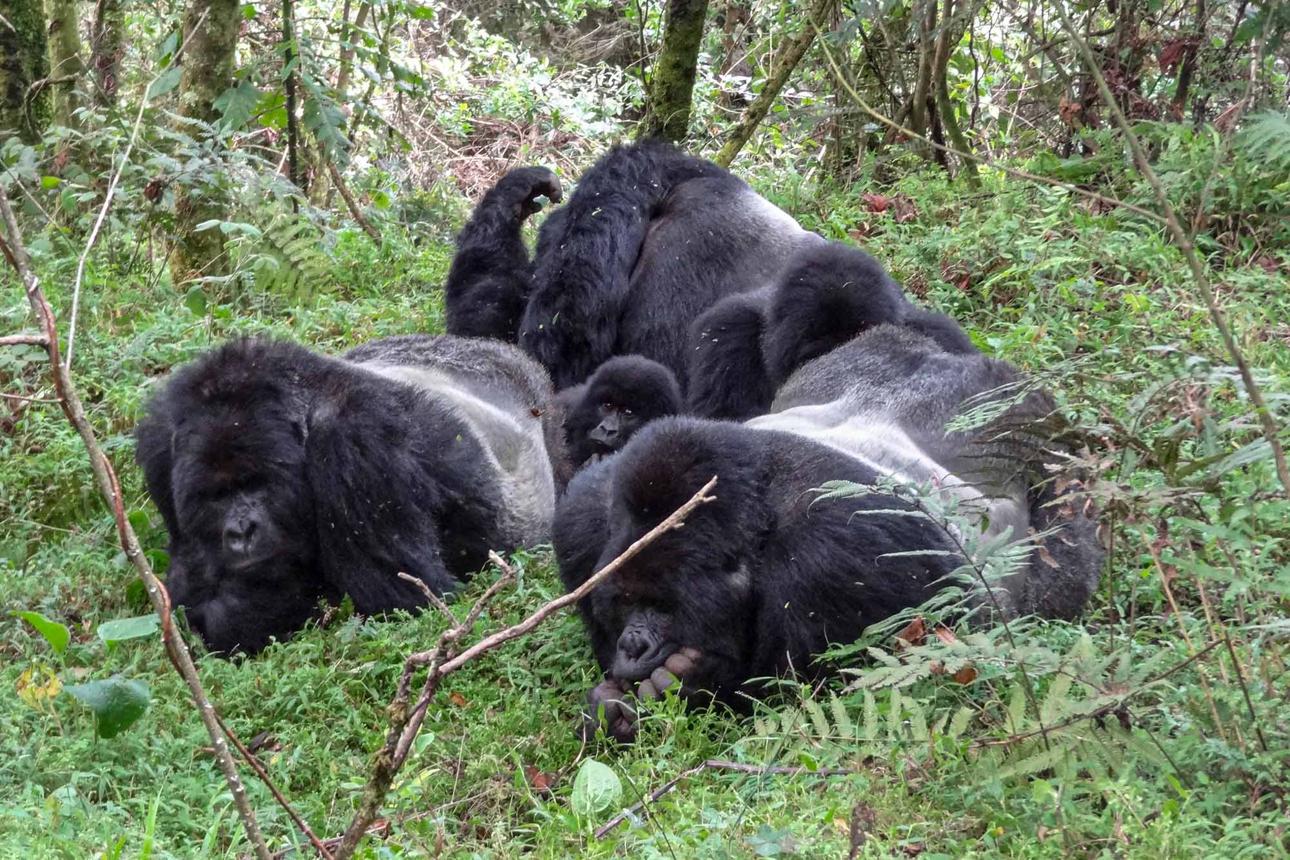
Adult males are known as silverbacks because mature males develop a distinctive silver-colored patch of hair across their backs.
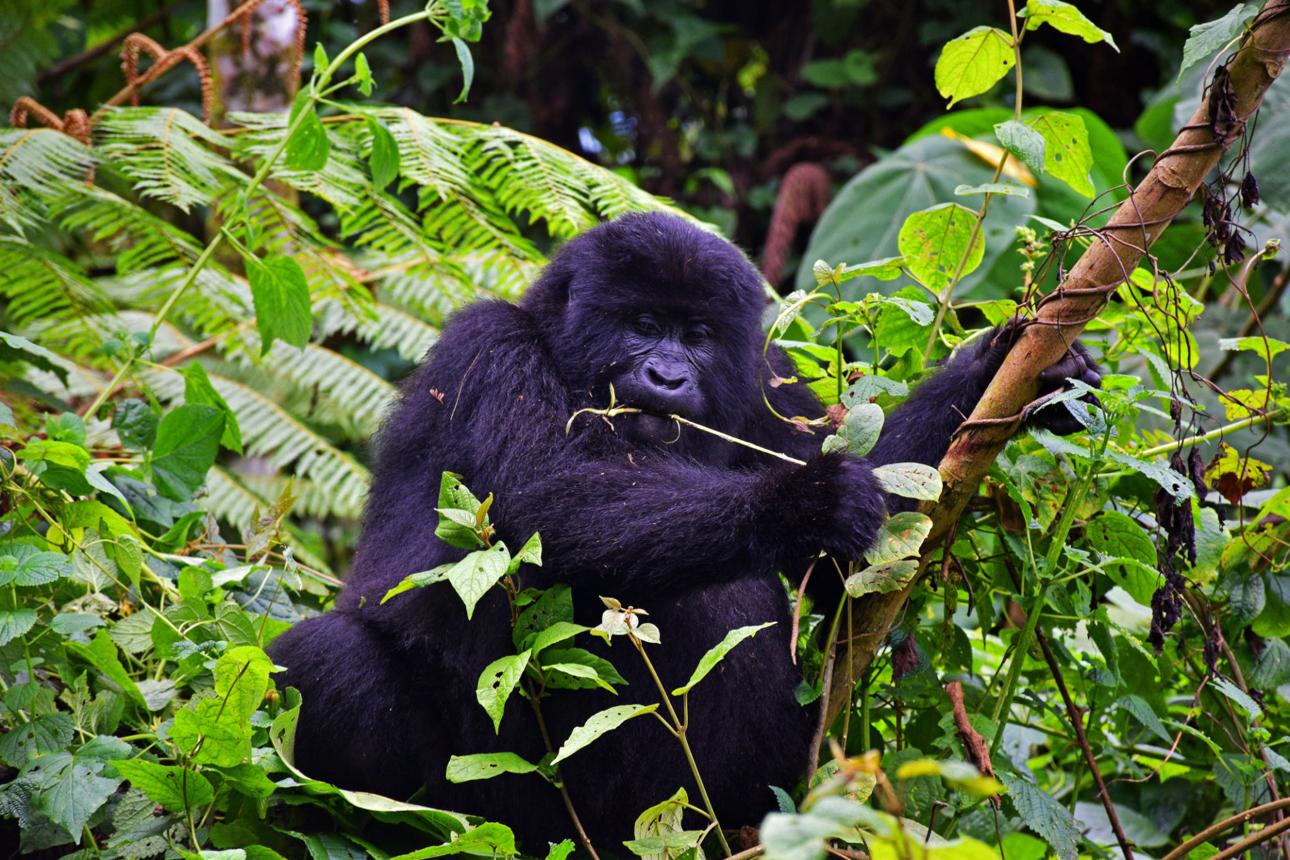
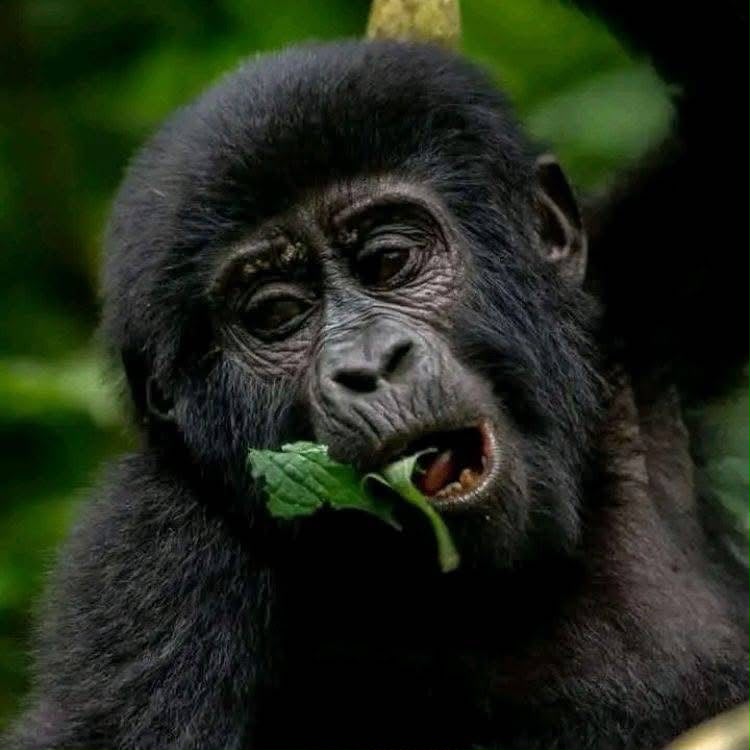
Mountain gorillas are primarily herbivores. Their diet consists mainly of leaves, shoots, stems, roots, flowers, and other vegetation. Although their size may appear intimidating, they are generally peaceful animals when they are not threatened.
Where Do Mountain Gorillas Live?
Mountain gorillas have one of the smallest geographic ranges of any great ape.
They are found in a protected region shared by three countries:
- Uganda
- Rwanda
- Democratic Republic of Congo
In Uganda, mountain gorillas are mainly found in Bwindi Impenetrable National Park and Mgahinga Gorilla National Park.
Rwanda’s mountain gorillas live in Volcanoes National Park, which forms part of the larger Virunga conservation landscape.
The forests provide food, shelter, and protection for the gorillas. Because their natural habitat is limited, conservation of these forests remains extremely important.
Mountain Gorilla Family Groups
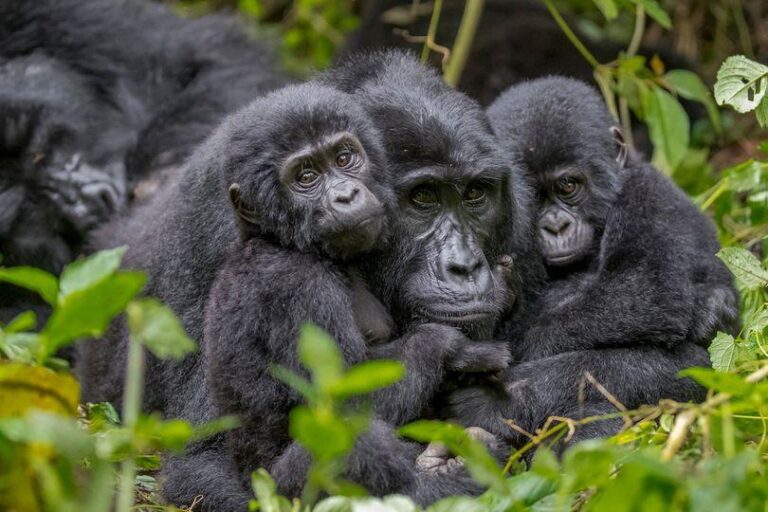
Mountain gorillas live in social groups known as troops or families.
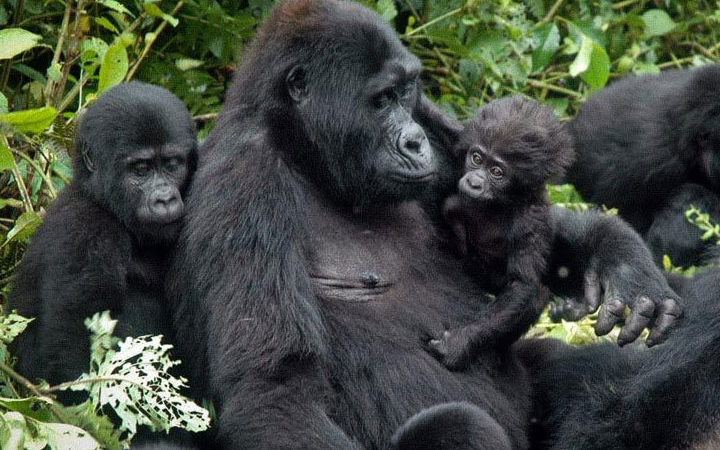
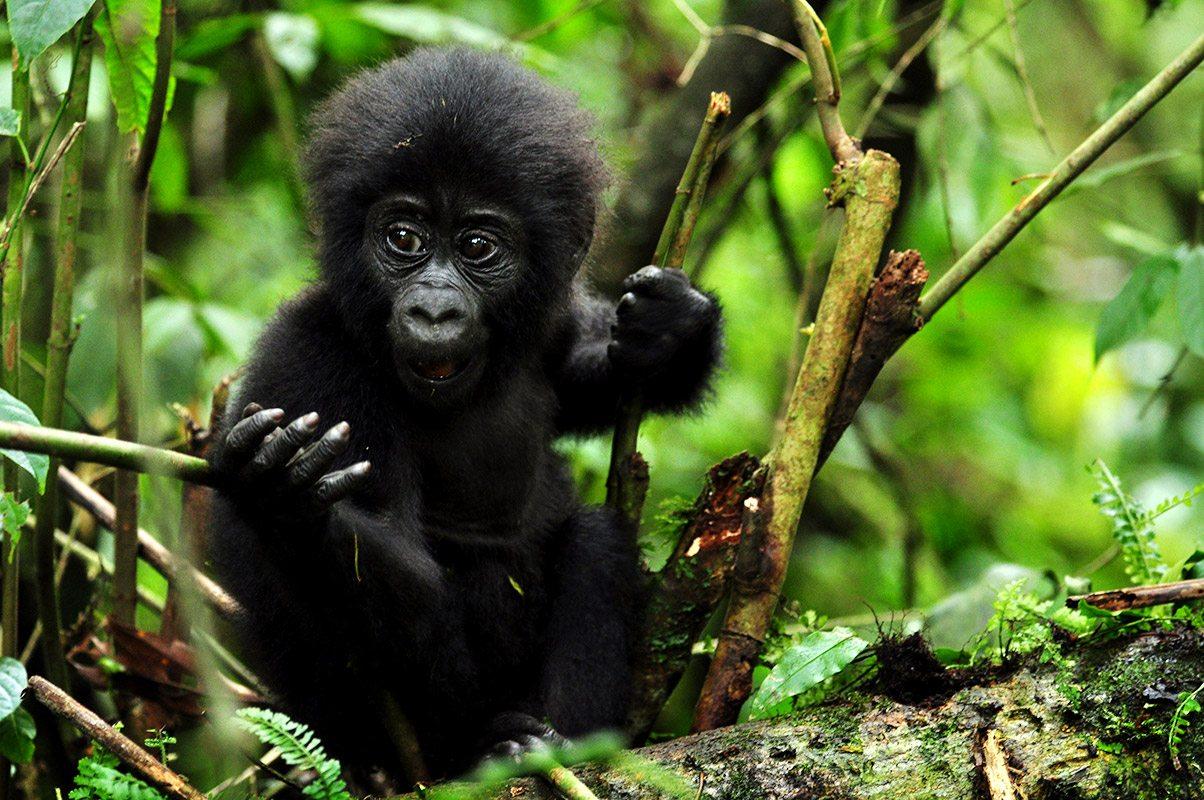
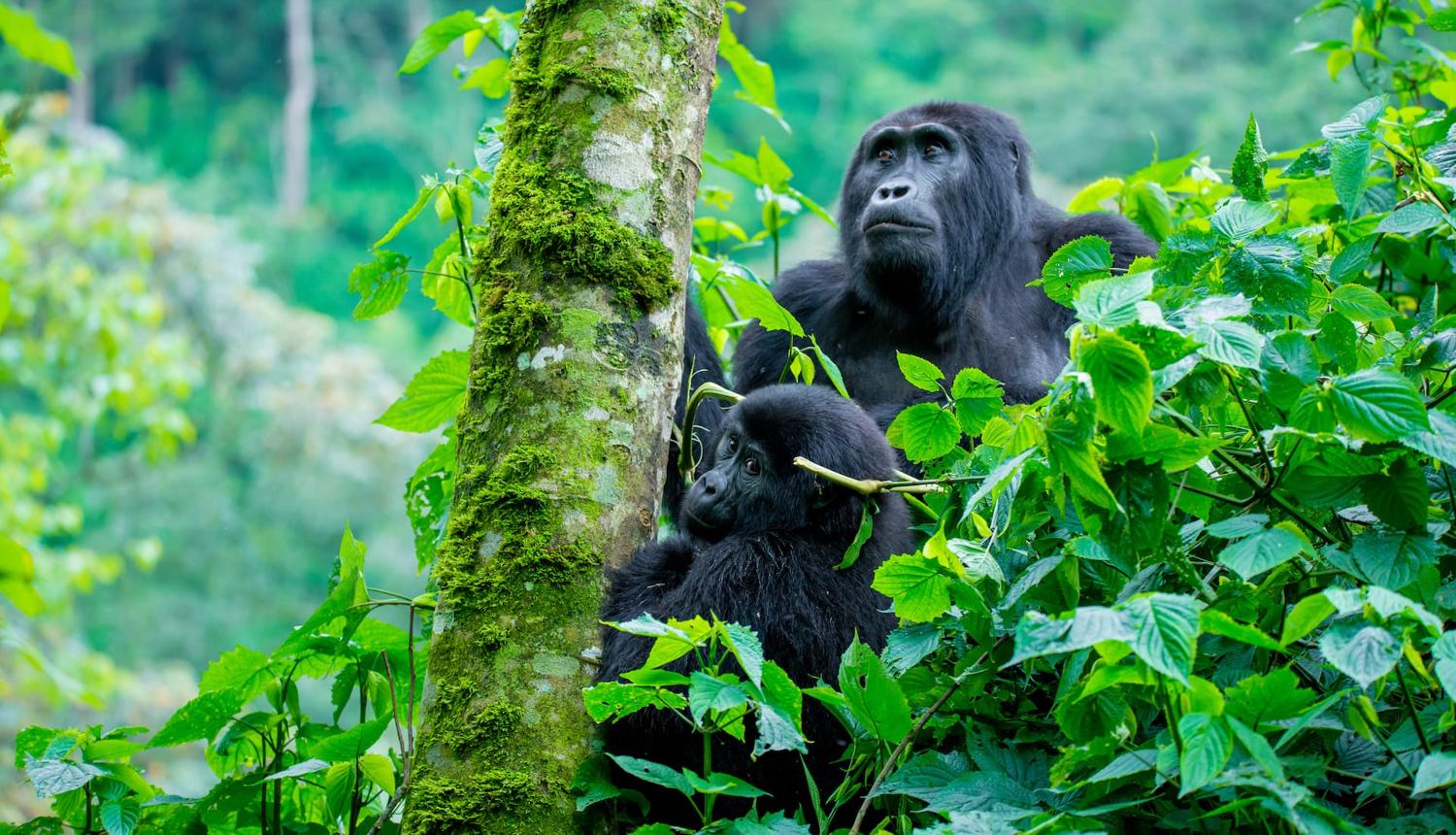
A typical gorilla family can include several individuals led by a dominant silverback. Other members may include adult females, younger males, juveniles, and infants.
The silverback plays an important role in protecting the group and maintaining social order. However, gorilla society is more complex than simply following one leader.
Members communicate through vocalizations, body movements, facial expressions, and physical interactions.
Watching these relationships during a gorilla trek is one of the most fascinating parts of the experience.
What Do Mountain Gorillas Eat?
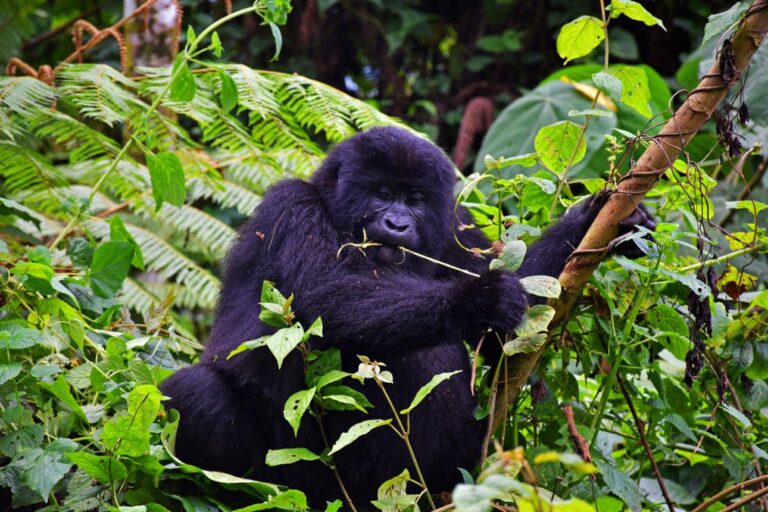
Mountain gorillas spend much of their day searching for and eating vegetation.
Their diet can include:
- Leaves
- Bamboo shoots
- Stems
- Roots
- Flowers
- Fruits when available
- Small amounts of insects and other food
Because vegetation is abundant in their forest environment, gorillas can spend several hours each day feeding.
During a trek, visitors may see gorillas sitting quietly while feeding, climbing over vegetation, or moving through the forest in search of food.
Mountain Gorilla Behavior
One of the most interesting things about mountain gorillas is their behavior.
Despite their enormous strength, mountain gorillas are usually calm and social animals. Much of their time is spent feeding, resting, grooming, playing, and caring for young ones.
Young gorillas are particularly playful. They may climb, wrestle, chase one another, and interact with adults.
Gorilla families also spend time grooming each other. This helps strengthen social relationships within the group.
A silverback may sometimes beat his chest, make vocalizations, or display his strength. However, such behavior should not automatically be interpreted as aggression. These displays are part of normal gorilla communication.
Are Mountain Gorillas Dangerous?
Mountain gorillas are wild animals and should always be treated with respect. However, they are not naturally aggressive toward humans.
Gorillas that are habituated for tourism and research have become accustomed to the controlled presence of people.
Visitors are still required to follow strict trekking guidelines. These rules are designed to protect both travelers and gorillas.
For example, visitors are expected to maintain a safe distance, avoid sudden movements, and follow instructions from their guides and park authorities.
Mountain Gorilla Trekking
Mountain gorilla trekking is the main way travelers experience these animals.
The adventure normally begins early in the morning at the park headquarters. Visitors are briefed before entering the forest.
From there, experienced trackers and guides lead visitors through the forest in search of a designated gorilla family.
The trek can be short or challenging depending on where the gorillas have moved. Since gorillas are wild animals, their location cannot be predicted with complete certainty.
Once the gorilla family is located, visitors are given a limited period to observe them.
This is usually an unforgettable moment.
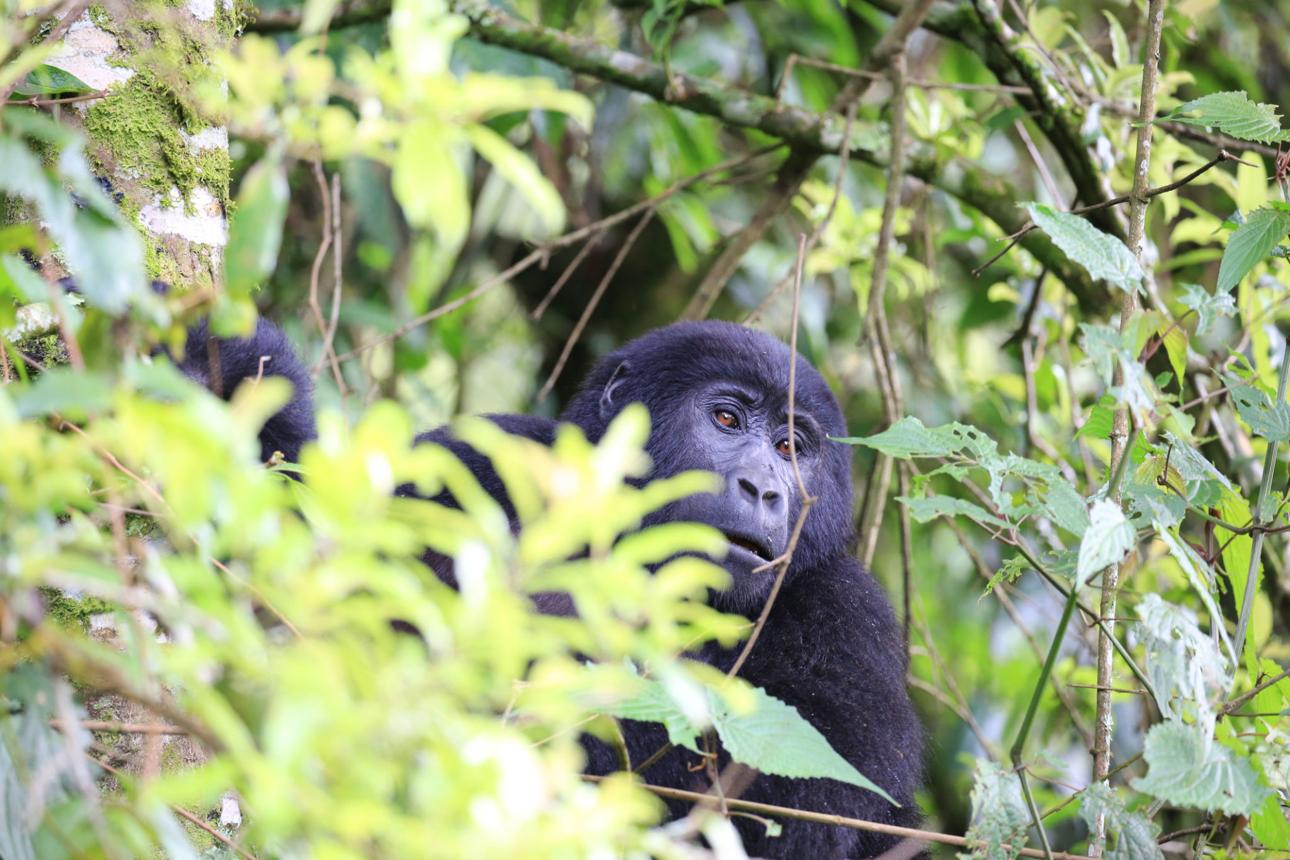
You may see a silverback resting beneath vegetation, mothers caring for infants, juveniles playing, or gorillas feeding peacefully around you.
Where Is the Best Place to See Mountain Gorillas?
Uganda, Rwanda, and the Democratic Republic of Congo all offer opportunities to see mountain gorillas.
Mountain Gorillas in Uganda
Uganda offers two important destinations for gorilla trekking: Bwindi Impenetrable National Park and Mgahinga Gorilla National Park.
Bwindi is especially famous for its ancient rainforest and diverse gorilla population.
Mgahinga, meanwhile, forms part of the Virunga landscape and offers spectacular mountain scenery.
Mountain Gorillas in Rwanda
Rwanda’s Volcanoes National Park is another famous destination for gorilla trekking.
The park is located in the Virunga Mountains and provides an accessible option for travelers combining gorilla trekking with a visit to Kigali.
Mountain Gorillas in the Democratic Republic of Congo
The Democratic Republic of Congo is also home to mountain gorillas in Virunga National Park.
However, travelers should always check current travel and security conditions before planning a visit.
When Is the Best Time to See Mountain Gorillas?
Mountain gorilla trekking can be enjoyed throughout the year.
However, many travelers prefer the drier periods because forest trails may be easier to navigate.
The wetter seasons can make trekking more challenging because paths may become muddy and slippery. At the same time, rainfall contributes to the lush vegetation that makes the gorilla habitat so beautiful.
Therefore, the best time can depend on your travel schedule, budget, and tolerance for wet trekking conditions.
Why Are Mountain Gorillas Endangered?
Mountain gorillas have historically faced serious threats, including habitat loss, disease, human pressure, and other environmental challenges.
Fortunately, conservation efforts have produced encouraging results.
Protected areas, scientific research, veterinary intervention, community involvement, and carefully managed tourism have all contributed to mountain gorilla conservation.
Gorilla tourism is particularly important because a portion of tourism revenue supports conservation and communities living around protected areas.
Therefore, responsible gorilla trekking can contribute directly to the protection of these extraordinary animals.
How Gorilla Trekking Supports Conservation
When travelers purchase gorilla trekking permits and participate in regulated tours, tourism revenue contributes to the conservation system.
This helps support:
- Protection of gorilla habitats
- Park management
- Wildlife monitoring
- Conservation research
- Local communities
- Employment opportunities
- Anti-poaching efforts
As a result, choosing a responsible safari operator and following park regulations becomes an important part of sustainable gorilla tourism.
What Should You Expect During a Gorilla Trek?
A gorilla trek should be approached as a genuine wildlife adventure rather than a guaranteed encounter at a fixed location.
You may walk through steep terrain, thick vegetation, muddy trails, and changing weather conditions.
The trek may take several hours depending on the location of the gorilla family.
However, the challenge is part of the experience.
When you finally encounter a mountain gorilla in the forest, the effort of reaching the family can feel completely worthwhile.
What Should You Pack for Mountain Gorilla Trekking?
Travelers should be prepared for changing forest conditions.
Important items include the following:
- Sturdy hiking boots
- Long trousers
- Long-sleeved clothing
- Waterproof jacket
- Gardening gloves
- Backpack
- Drinking water
- Snacks
- Insect repellent
- Camera
- Extra batteries or power bank
- Hat
- Walking stick
A porter can also be hired to assist with luggage and provide support during difficult sections of the trek.
Why Go Mountain Gorilla Trekking?
Mountain gorilla trekking offers something that traditional wildlife safaris cannot always provide.
Instead of viewing animals from a vehicle, you enter their forest environment and observe their natural behavior at close range under strict conservation guidelines.
The experience can also provide a deeper appreciation of rainforest ecosystems and wildlife conservation.
For many travelers, seeing a mountain gorilla for the first time becomes one of the most memorable moments of an African safari.
Frequently Asked Questions About Mountain Gorillas
Are mountain gorillas friendly?
Mountain gorillas are generally peaceful and social animals. However, they remain wild animals and must always be treated with respect.
Where can I see mountain gorillas?
Mountain gorillas can be seen in Uganda, Rwanda, and the Democratic Republic of Congo.
Can children go mountain gorilla trekking?
Age requirements apply to gorilla trekking, so families should confirm the current regulations before booking.
How long does gorilla trekking take?
The duration varies depending on where the gorilla family is located. Some treks can be relatively short, while others can require several hours of hiking.
Can I take photos of mountain gorillas?
Photography is generally permitted, but visitors must follow park guidelines and avoid using flash.
Inconclusion
The mountain gorilla is much more than a famous African wildlife attraction. It is an intelligent, social, and powerful great ape whose survival is closely connected to the protection of its forest habitat.
From the ancient forests of Bwindi to the volcanic landscapes of Rwanda, meeting these incredible animals provides travelers with a rare opportunity to witness wildlife in its natural environment.
With responsible tourism, strong conservation programs, and continued protection of their habitat, future generations can hopefully experience the same unforgettable encounter with mountain gorillas.
Plan Your Mountain Gorilla Adventure
Ready to experience mountain gorillas in the wild? Berengei Africa Tours can help you plan a memorable gorilla trekking adventure in Uganda or Rwanda, including permits, transportation, accommodation, guides, and safari arrangements.